Specifying wholesale timber wood slats feature wall panels suppliers for Wholesale and OEM Orders
Unit price settles the question only after usable wall coverage, finish consistency and replacement risk are counted. For a wholesale or OEM order, compare cost per installed square metre rather than cost per panel alone: panel format, cut waste, edge treatment and packing damage all affect the number of saleable units. A lower quote can lose its advantage if the slat spacing varies between batches or if panels arrive with chipped corners that cannot be repaired for retail sale.
Two suppliers quoting the same species name may be offering different constructions: veneered MDF slats, solid timber slats, or timber-faced slats on a backing board or acoustic felt. Those options differ in material cost, weight, movement with humidity and how buyers can trim the panel on site. Agree the construction drawing, finish sample, dimensional tolerances and approval record before production; then compare the landed cost against the intended use and reorder plan.
What the Design Has to Balance
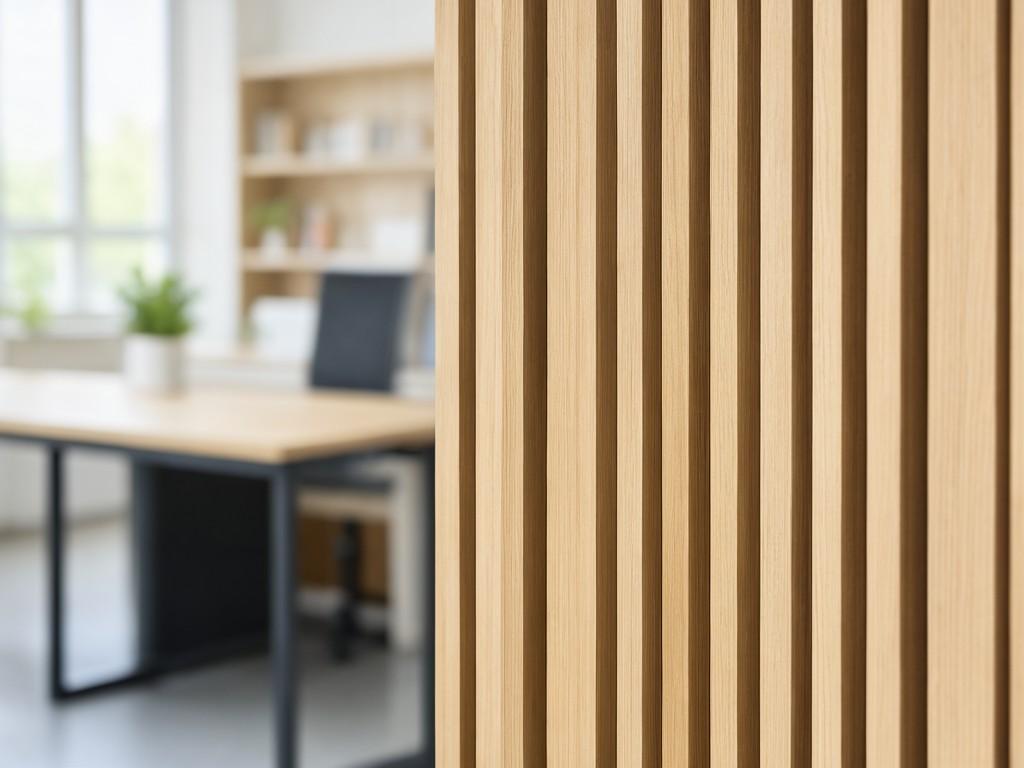
Slat width, depth and gap set the visual rhythm, but they also determine material use and panel weight. Narrow slats with tight spacing consume more face material and add machining steps; wider gaps reduce coverage and make the backing more visible from oblique angles. Buyers should approve a full-size or representative sample under the lighting expected at the installation site.
Timber is hygroscopic, so moisture change can cause movement across the grain. Stable backing and controlled assembly reduce the risk of slats lifting or panels bowing, but they do not make timber suitable for persistently damp locations. Specify indoor conditions, the substrate, and any expected temperature or humidity variation before selecting solid wood or a veneer-faced construction.
Approval rule: Treat the signed drawing and retained finish sample as the production reference. A species label alone does not define grain direction, colour range, slat spacing or acceptable natural variation.
Measured Performance in Real Use
For installed panels, the checks that prevent avoidable claims are panel length and width, overall thickness, slat pitch, edge straightness and flatness. Ask the supplier to record the agreed measurement points and tolerances on the drawing; visual approval by itself will not control fit across a multi-panel wall.
Finish review should cover colour, sheen, grain match and surface defects under consistent light. Veneer adhesion and slat attachment can be checked on production samples, while a dry-fit inspection can reveal gaps or uneven alignment before packing. If the panels will be cut during installation, confirm whether exposed edges need a matching treatment and whether the chosen backing can be trimmed without loosening the slats.
A sample establishes appearance and assembly, not every production limit. Keep the approved reference, inspection notes and batch identification together so a later reorder can be compared against the same acceptance basis.
Specification Range and Customisation Limits
Commercial panel formats commonly include long rectangular sheets around 2400 × 600 mm, but stock sizes vary by supplier and backing system. Slat faces often fall within roughly 20–40 mm wide, with depth and gap set to suit the design. These are planning ranges, not guaranteed catalogue tolerances: confirm the actual cross-section, usable coverage and overall thickness in the approved drawing.
Species, veneer cut, stain, clear coat, backing colour and edge detail can usually be specified. Very small slat sections, unusual radii or a new backing geometry may need dedicated tooling or a revised assembly method. Agree which features are standard and which change setup cost or minimum order quantity before comparing supplier quotes.
| Finish route | Typical colour direction | Buyer consideration |
|---|---|---|
| Clear-coated natural veneer or timber | Pale oak, warm oak, walnut and other species-led tones | Retains visible grain; approve natural colour and grain variation limits. |
| Stained timber or veneer | Smoked brown, darker walnut-like shades and custom stain colours | Colour can read differently across species and grain; compare a physical sample. |
| Opaque painted finish | White, black, grey or buyer-specified colour | Conceals much of the grain; define sheen and touch-up expectations. |
| Unfinished or lightly sealed | Natural timber appearance | Allows local finishing, but the installer assumes more control over final colour and protection. |
How to Choose Before Requesting a Quote
Send suppliers one controlled specification rather than a reference photo alone. Include the installation area, panel dimensions, slat section and pitch, timber or veneer species, backing type, finish sample or colour reference, edge details and packing requirement. Mark every dimension that may not change during value engineering, then ask each supplier to state any proposed substitution separately.
A useful quote comparison separates sample and setup charges, unit price, minimum order, production time, export packing and the cost effect of custom finishes. Approve the physical sample and drawing before the production order; record the approval date and revision so artwork, finish and dimensions cannot drift between sample and bulk run.
Veneer-Faced Slats
A veneer-faced construction can reduce timber use and panel weight, which may improve freight cost per saleable panel. Specify veneer face, core material and edge appearance; exposed cuts may show the core unless the design includes matching edge treatment.
Solid Timber Slats
Solid slats provide timber through the section and suit designs where edges remain visible or are cut on site. They usually cost more and respond more directly to humidity changes, so clarify moisture conditioning, fixing method and storage conditions before ordering.
Who Uses It and Where It Matters
The right panel is shaped by the installation and the person who will handle repairs or reorders, not by the room label alone.
- Interior fit-out distributors choose repeatable panel sizes and finishes for contractor projects; edge protection and batch matching matter when orders ship in stages.
- Furniture and interior-product brands need a finish sample that matches the retail image and packaging information; stable approved references help limit colour disputes on repeat orders.
- Hotel, office and retail project buyers often need coordinated panels across a large wall area; consistent slat pitch and clear installation orientation reduce visible breaks between packs.
- Installers working around sockets, corners or uneven substrates need to know where panels can be trimmed and how cut edges should be finished before the specification is released.
Stock Availability and Reorder Planning
Stock status depends on species, panel construction, finish and the supplier’s current raw-material allocation. Standard formats and common finishes may be available sooner than a custom stain, non-stock species or altered slat profile. Ask whether a quoted quantity is finished stock, work in progress or dependent on a new material purchase.
For planned reorders, retain the approved finish sample, drawing revision and batch details. Natural timber and veneer can vary between production lots, so tell the supplier whether future orders must match an existing installation or whether a new batch can be approved against a fresh sample. Forecast quantities early enough to combine production where that reduces setup or freight cost.
Confirm the production window, sample approval deadline and dispatch estimate in writing. A change to stain, backing or dimensions after approval can affect both material procurement and the delivery schedule.
Export Packaging and Handling Protection
Long panels are vulnerable to corner impact, face abrasion and bending under uneven stack pressure. Specify protective face separation, corner guards and a carton or pallet arrangement that supports the panel length. Packaging should keep finished surfaces from rubbing during transit and should identify the correct handling orientation.
For container or LCL freight, confirm pack count, gross weight, outer dimensions and whether the panels can be stacked without crushing the lower cartons. Timber products should remain dry in transit and storage; request suitable moisture protection for the route and warehouse conditions, while avoiding sealed packing of panels that are not dry before packing.
Agree carton markings, SKU labels, batch references and any retailer barcode or artwork before printing. A packaging sample or pre-shipment photos can confirm label position and protection layout before the full shipment leaves the factory.
Questions Buyers Ask Before Ordering
Can the bulk panels match the approved sample?
The sample sets the target for construction and appearance, while timber grain and tone can vary naturally. Define acceptable variation, retain a signed reference and request a production sample or first-off approval when colour matching is commercially important.
What information is needed to quote a custom panel?
Provide panel size, slat width and depth, gap, backing material, species or veneer, finish, edge treatment, quantity and destination. A dimensioned drawing and finish reference reduce assumptions; the supplier can then identify tooling, MOQ and any non-stock material requirements.
Can the MOQ be reduced for a first order?
A trial quantity may be possible, but custom species, stains and panel dimensions can add setup or material costs. Ask for pricing at both the trial quantity and planned reorder volume so the cost of market testing is clear against the expected repeat-order price.
How should panels be checked on arrival?
Inspect outer cartons first, then check a representative set for panel dimensions, flatness, slat attachment, finish and transit damage. Record carton and batch identification with any claim so the supplier can trace the production lot and packing configuration.
Request a Sample Before Production
Send the drawing, target quantity, destination and finish reference with your inquiry. A sample review gives your team a chance to approve slat proportions, colour, backing and edge details before the bulk specification is locked.