wholesale oak wood slat wall panel factory: Specification, Ordering and Quality Notes
For private-label reorders, lock the substrate, oak veneer grade, slat spacing and finish before optimizing unit price. A veneer-faced MDF panel usually controls cost and dimensions more closely than solid-oak slats; solid oak changes the price, weight and natural color range.
The complaint that repeats across reorders is a visible mismatch: the new panels have a different oak tone, slat rhythm or sheen from the approved sample. Those differences can be more costly than a small unit-price saving once a retailer has installed a mixed batch or processed returns. The practical remedy is a frozen product specification and a retained, signed finish sample.
Size, Weight and Specification Range
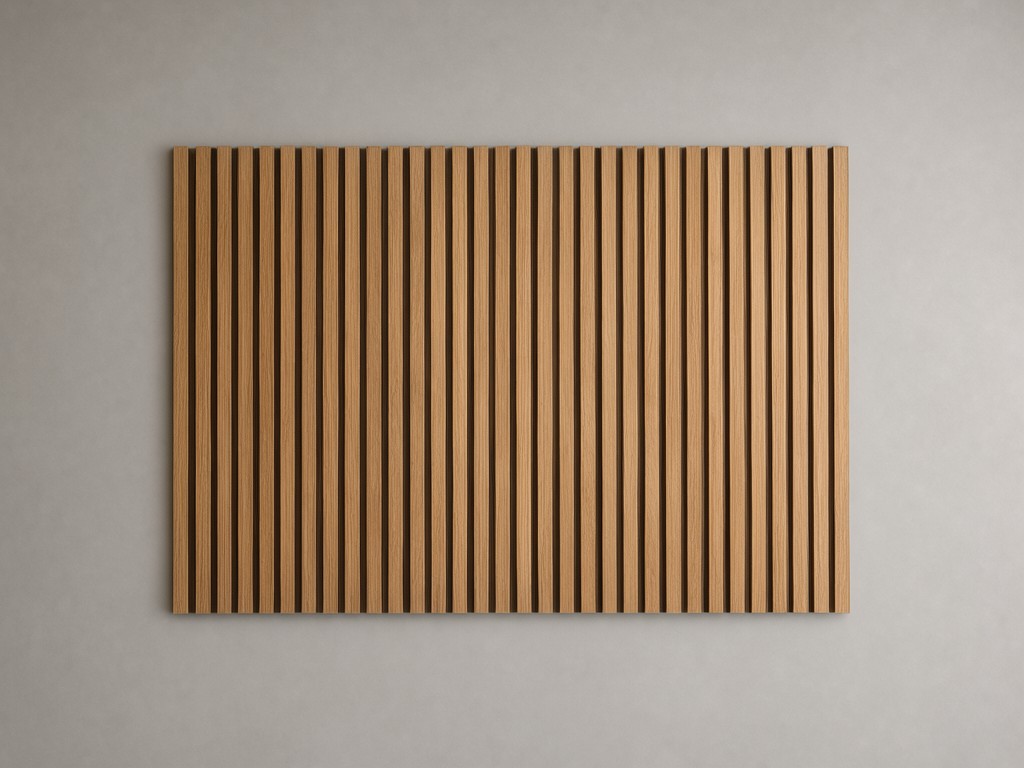
Slat wall panels are commonly built with oak veneer faced onto MDF slats, then fixed to an acoustic felt backing. The dimensions below are quote-planning ranges, not a substitute for a signed drawing. Panel weight changes with overall thickness, backing and substrate density, so confirm the finished weight on the production sample before setting carton limits or installation instructions.
| Specification | Typical quote range or option | What to fix for repeat orders |
|---|---|---|
| Panel format | Commonly around 2400 × 600 mm; other lengths can be quoted to suit the project. | Finished width and length, squareness tolerance, and whether edges are trimmed or exposed. |
| Slat layout | Slats are often 25–40 mm wide with gaps around 10–20 mm; depth and spacing are configurable. | Slat width, gap, projection, edge profile and layout across adjoining panels. |
| Face and finish | Oak veneer on MDF is a common cost-controlled build; clear lacquer and oil-style finishes are typical choices. | Veneer appearance grade, finish type, sheen and the approved reference sample. |
| Backing and finished mass | PET felt or other specified backing; a finished panel may fall near 8–14 kg depending on its build. | Backing material, thickness, attachment method and approved weight range per panel. |
How to Choose Before Requesting a Quote
Start with the approved sample or drawing, not a broad description such as “natural oak.” Oak veneer varies in grain and tone, so define the acceptable appearance, the finish sheen and how much natural variation the brand will permit. For private-label consistency, request that veneer selection and panel layout follow the same agreed criteria across the production lot; a photographic reference alone may not show sheen or color accurately.
Then confirm the installation conditions. Long panels need protection from edge damage in transit and should be stored flat in a dry, stable environment before installation. Where room humidity varies, ask the factory to confirm substrate and backing choices against the intended site conditions. A veneer-faced MDF construction is generally the more economical route for repeatable dimensions; solid oak carries a higher material cost and a wider natural movement and appearance range.
Buying Mistakes That Lead to Returns
Most quality disputes start with a consistency gap between the approved sample and the purchase specification. If veneer species, grade, finish or slat spacing is not recorded, a factory can meet the written order while the buyer still sees a different look. Keep the signed sample, drawing and finish details together as the reorder reference, and identify any acceptable natural variation before the order is released.
A second avoidable cost is comparing panel prices without comparing the full build. Thinner backing or a different substrate can lower the quote but change panel stiffness, mass and the way joints meet on a wall. Skipping a packed-sample review also leaves long edges and corners exposed to freight damage. Confirm carton protection and the number of panels per pack against the actual route and handling plan; damage claims can erase the initial unit-price difference.
Usage Scenarios and Buyer Segments
Private-label interior product brands typically specify these panels for residential feature walls, where buyers notice tone changes and uneven gaps across adjacent pieces. A locked slat layout and finish sample help keep room sets visually aligned when a retailer combines panels from separate cartons or reorder batches.
Furniture and interior fit-out distributors may supply panels to offices, reception areas or hospitality projects with repeated wall runs. Their priority is not only the face appearance: panel length, edge condition and carton protection affect installation time and replacement rates. For projects that specify acoustic performance, the complete wall assembly and installation must be assessed; a decorative slat panel alone should not be sold with an unverified performance claim.
Inspection Items and Test Methods
A useful inspection starts with dimensions and appearance against the approved drawing and reference sample. Check panel length, width, thickness, squareness, slat width and gap at consistent points; compare veneer tone and finish sheen under the same lighting conditions used for sample approval. Record the inspection outcome by batch so a later claim can be traced to the relevant production lot.
For construction checks, inspect veneer edges and slat faces for lifting, bubbles, chipped corners or finish interruptions. A practical adhesion check on a production sample can expose weak bonding before packing; confirm the method and acceptance criteria with the buyer rather than treating a spot check as a universal pass standard. Check panel flatness after conditioning, and inspect felt attachment and cut edges for separation. Finally, review a packed sample after handling to assess whether corner guards, separators and carton strength protect the face and edges on the intended shipping route.
For a specification review, send the target panel dimensions, slat layout, veneer and finish reference, backing choice, annual order estimate and destination packaging needs. Discuss your oak slat panel specification before approving the sample so the quoted build can match the intended reorder.