wholesale dining room feature wall panelling company: What Buyers Should Check Before Ordering
When a brand extends an existing range, a dining room feature wall often has to match installed furniture, lighting and the finish already approved for retail or hospitality projects. A wholesale panelling programme works best when the drawing, sample and finish reference are agreed before production; otherwise, small differences in profile depth or colour can make repeat installations look like separate ranges.
Specification checkpoint: approve one reference panel against the intended room lighting, wall substrate and joining detail. Record the face finish, panel dimensions, edge treatment and installation orientation on the same revision-controlled drawing.
Where Cheaper Alternatives Fall Short
In dining rooms, panels face repeated wiping, chair contact and changes in indoor humidity. Low-cost boards can show swollen edges near spills, chipped corners at installation or visible shade differences between cartons. Those complaints usually trace back to an underspecified core, exposed edges or an approval sample that did not represent the production finish.
| Dining-Room Condition | Complaint Seen After Installation | Specification to Agree |
|---|---|---|
| Regular wiping near tables or serving areas | Edge swelling or finish wear where moisture reaches the board | Core type, sealed edges and approved cleaning limits |
| Close-set tables and frequent chair movement | Chipped corners or scuffed lower edges | Panel edge detail, protective finish and installation clearance |
| Large continuous feature wall across multiple cartons | Colour or profile variation that breaks the visual line | Finish reference, profile dimensions and batch identification |
Design Constraints Behind the Specification
Drawing rule: dimension the visible face, overall panel, profile pitch and fixing allowance separately. A nominal panel size alone does not define the finished wall layout.
Wall flatness, corner returns and socket positions determine whether a standard panel can be installed without site trimming. If the design uses repeated grooves or slats, the drawing should state the pitch and the measurement reference, such as groove centre to groove centre. Confirm whether dimensions apply before or after the face layer and edge treatment are applied.
A physical sample is useful for colour and surface feel, but it does not settle every fit question. Buyers should separately approve a dimensioned profile sample or shop drawing, plus a layout showing how end panels, corners and cut edges are handled. Where an existing private-label product is the reference, provide a retained sample and identify which features must match exactly and which may vary within an agreed tolerance.
Materials and Construction Trade-offs
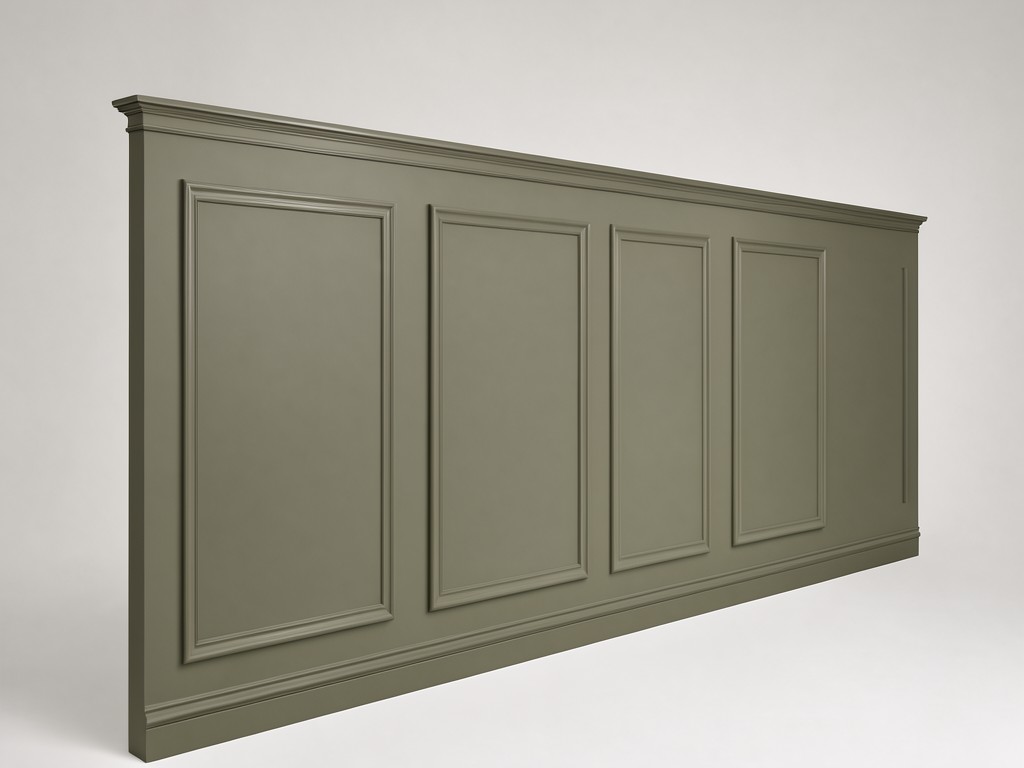
For interior feature walls, a practical construction is a profiled MDF panel with a decorative face layer and sealed edges. The board gives a machinable base for grooves and repeated profiles; the face layer sets the visual effect and affects unit cost. Where the room has frequent wipe-downs or higher humidity, buyers should specify suitable board selection and edge sealing rather than assume every decorative panel is intended for damp locations.
A printed or laminated surface can hold a repeatable pattern across production lots and is generally easier to match from an approved artwork file. Veneer offers natural grain variation and may carry a higher material cost; the buyer then needs to define acceptable grain character and colour range, not expect every panel to look identical. The finish choice should follow the project’s cleaning routine and the amount of natural variation the range can tolerate.
Customisation Options and Their Limits
Private-label changes are easiest to control when they use an established panel profile and alter only the finish, pack label or cut length. A new groove pattern or tooling profile adds setup work and requires a fresh dimensional approval; combining several profile changes with a new surface finish also makes it harder to isolate the source of a mismatch.
- Artwork should include the repeat scale, grain direction or pattern orientation, colour reference and any unprinted edge allowance.
- The sample approval should identify the exact face material and sheen; a digital image is not a substitute for a physical finish reference.
- Confirm panel length, pack quantity and usable coverage together. A change to one can affect carton dimensions and freight planning.
- If the project needs non-standard fire or environmental documentation, specify the required market and documentation before the material is selected.
OEM and ODM Programme Structure
An OEM order follows the buyer’s approved drawing, finish reference and brand packaging specification. ODM support is more appropriate when the buyer needs a supplier-developed profile or construction proposal before the final specification is fixed. In both cases, the order should move through named approval points: drawing revision, material and finish sample, production sample where required, artwork proof, and signed release.
A written change record protects both the buyer and the factory. If the approved finish is unavailable or a board source changes, the supplier should not substitute without buyer approval. Keep the approved panel sample, drawing revision and packaging artwork linked to the purchase order so a repeat order does not rely on an old email description.
Quality Control and Batch Consistency
For a multi-carton order, consistency depends on controlling the approved inputs as well as the finished dimensions. The production record should identify the panel drawing revision, board and face finish, edge treatment, artwork version and batch reference. Finished panels can then be checked against the agreed dimensions and visual sample before packing, with exceptions held for buyer review rather than mixed into the shipment.
Colour can appear different under warm dining-room lighting than under warehouse lighting, so compare production pieces against the retained sample in consistent conditions. For natural veneer, the approved range should define allowable grain and shade variation. Carton labels should carry the batch or lot reference and panel identification needed to keep one installation area traceable to its supplied cartons.
Keeping Repeat Orders Supplied
For a retail buyer managing a continuing range, reorder timing depends on whether the core board, decorative face and edge materials remain available. A stocked standard finish may shorten replenishment planning; a custom colour or special profile can require material allocation and a new production slot. Agree a forecast and reorder trigger against actual project demand, then confirm stock status before promising a delivery date.
| Order Element | Lead-Time Basis | MOQ Basis |
|---|---|---|
| Standard profile and stocked finish | Confirmed stock, order quantity and packing schedule | Supplier’s available pack and production release quantity |
| Custom colour, face layer or branded carton | Material availability, artwork approval and production slot | Minimum material or print batch, confirmed at quotation |
| New profile or tooling change | Drawing sign-off, tooling readiness and sample approval | Tooling and run-size economics agreed for the programme |
Request confirmation of carton protection, pallet configuration and export labels alongside the order schedule. These details affect how panels arrive at a distributor or project site and can prevent corner damage or mixed-batch handling during onward delivery.
Specification review: share the panel drawing, finish reference, target order volume, packaging brief and required ship window before quotation. Request a specification review to confirm the sample and approval steps, MOQ basis and repeat-order plan before production release.