wholesale bedroom accent wall panels suppliers - Bulk Supply and Specification Guide
Repeat loading drives the failure: panel edges can chip, faces can scuff, and long cartons can bow under uneven stacking. For distributors qualifying a second source, those defects matter beyond the damaged units; finish and dimension drift between lots can trigger room-set mismatches and costly reorder requests.
This guide covers MDF slat panels with decorative faces and PET felt backing. The practical decision is not simply the lowest unit price. It is whether the panel construction, finish control and export packing hold steady across repeat orders.
Where Cheaper Alternatives Fall Short
A lower-cost board or thinner face can reduce the quote, but it leaves less room for machining and handling variation. Slat width differences become visible across a joined wall; a face that varies in shade can break continuity between panels from separate cartons. Thin or poorly bonded felt may also pull away at an edge during installation.
Match the specification to the buyer’s real failure point. These packaging and build checks help prevent the complaints that most often turn into replacement shipments:
| Freight or Use Condition | Complaint Seen at Receipt or Install | Packing or Specification Check |
|---|---|---|
| Long cartons stacked in a container or warehouse | Bent panels, crushed corners or damaged slat ends | Set a carton stacking limit with the supplier; use edge protection, internal support and a pallet pattern that avoids overhang. |
| Panels combined across cartons for one bedroom wall | Noticeable shade or sheen variation across adjacent panels | Approve a finish sample, define the face material and sheen, and keep each room set within a controlled production lot where possible. |
| Panels stored before installation in a humid or unconditioned space | Panel bow, lifted face material or backing separation | Specify flat, dry storage; check panel flatness and face-to-core and felt-to-panel adhesion before packing. |
Size, Weight and Specification Range
Weight and stiffness trade off against each other. A thicker MDF slat can feel less flexible during handling, but it raises carton weight and freight cost; a lighter build is easier to move, yet needs careful checking for panel flatness and edge integrity.
As a starting point, common panel formats are around 2400 × 600 mm, with a finished build near 21–22 mm and PET felt backing around 9 mm. Finished weight often falls in the 8–12 kg per panel range, depending on MDF density, slat layout and face finish. Treat these as quotation ranges, not fixed tolerances; confirm the approved sample and packing dimensions before placing a production order.
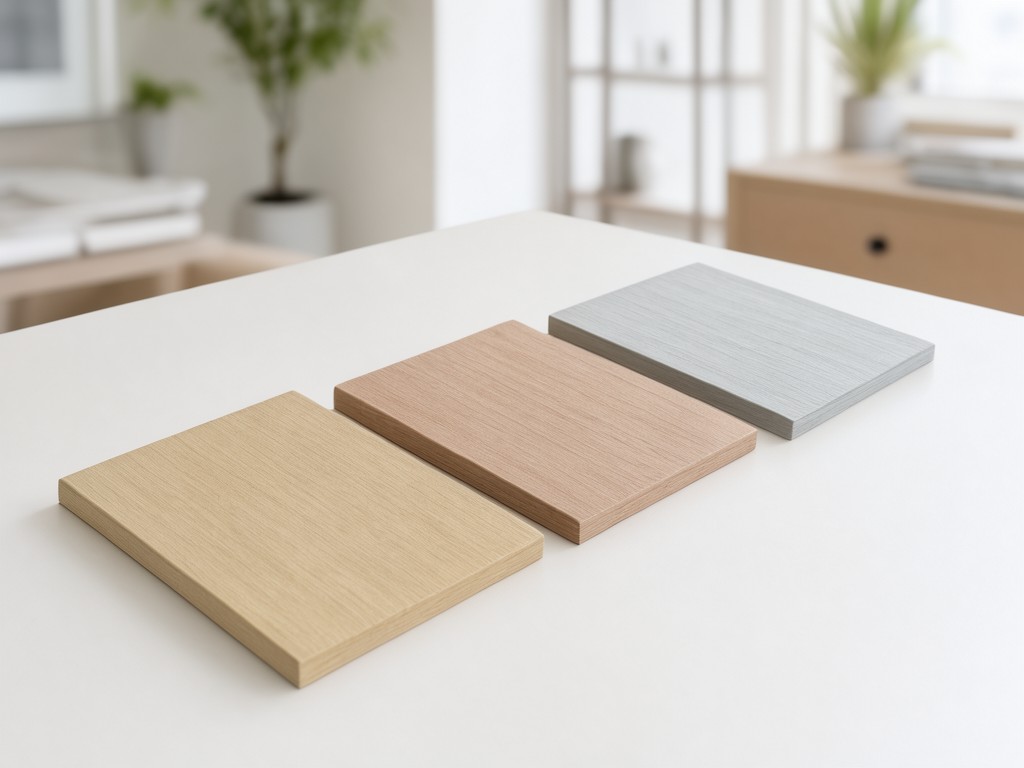
Veneer-Faced MDF
Natural wood variation is part of the appearance. Approve a reference range for grain and shade, then check finished panels under consistent lighting. This option can cost more because face selection and matching require tighter control.
Melamine-Faced MDF
A printed or solid-colour face can simplify repeat matching across larger orders. Confirm the surface texture and sheen with a physical sample; a close digital colour match does not establish the final appearance.
Quote rule: Lock panel length, width, total thickness, slat spacing, face finish, backing and weight basis against the approved sample. A change to any one of these can affect both appearance and freight cost.
How to Choose Before Requesting a Quote
The limiting factor is rarely the headline specification. It is whether the supplier can repeat the same visible and measurable details after a finish change, a production gap or a larger reorder.
- Send the target panel drawing or a physical reference, including finished dimensions, slat pitch and edge treatment.
- Identify whether the face is veneer, melamine or another agreed finish; specify the colour reference, sheen and acceptable natural variation.
- State the expected order mix, annual demand and whether future orders need to match an existing room set.
- Confirm carton quantity, carton size, pallet requirement, retail labels and batch identification before comparing landed costs.
- Ask for a pre-production sample and an agreed approval record. Keep the approved face, backing and dimensions as the comparison point for repeat lots.
For bedroom fit-outs, confirm the installer’s wall layout and fixing method as well as the panel format. A supplier quote without that information may appear cheaper, then add cost through cutting waste, mixed-finish cartons or replacement pieces.
How Consistency Is Held Across Batches
Batch control starts before the face is applied. Incoming MDF thickness and condition, slat dimensions and felt backing should be checked against the order specification. After machining and assembly, measure panel length, width, overall thickness and slat spacing at defined points rather than relying on one sample from the first carton.
Finish comparisons need a retained reference and consistent viewing conditions. Veneer naturally varies in grain; the supplier should agree on acceptable variation instead of promising identical wood patterns. For printed or solid finishes, lot-to-lot shade and sheen drift can be checked against the approved sample before packing.
Adhesive coverage, felt bond and panel flatness affect handling and installation. A documented inspection record for dimensions, appearance and carton condition gives the importer a practical basis for comparing a second source with the current supplier. Batch labels on cartons also help isolate a complaint without holding unrelated stock.
Capacity, Tooling and Scheduling
Standard panel formats usually need less setup than a custom width, slat profile or edge detail. Custom dimensions may require revised cutting plans or dedicated fixtures, so request the tooling or setup cost separately from the unit price. A new face colour or veneer selection also needs sample approval before the production slot is fixed.
For a second-source qualification, schedule time for sample review, packaging confirmation and any required label artwork before mass production. Ask the supplier to state the production window, order split options and how repeat batches will reference the approved specification. Lead time depends on material availability, finish selection and order quantity; confirm it against the actual purchase order rather than a general estimate.
Share your target dimensions, finish, expected volume and export packing requirements for a specification review. Request a specification review before sampling to align the quote, approval sample and batch checks.