Specifying top quality bedroom upholstered cushion wall panels factory for Wholesale and OEM Orders
When a brand extends an existing range, the first problems often appear at installation rather than in the sample room: adjacent panels sit at different depths, fabric shades vary between lots, or cushion edges flatten after repeated contact. Those defects can turn an otherwise acceptable unit into a replacement claim. Matching the reference panel’s finished dimensions, foam feel, fabric direction and mounting arrangement helps protect the range’s appearance across repeat orders.
For a wholesale or private-label program, the useful cost measure is sellable panels per shipment, not the lowest backing or foam price. A thinner backing may reduce freight weight, but it can flex during handling; a lower-cost cover may show abrasion or shade variation sooner in a bedroom display. Set the product around the expected panel size, room layout and retail handling, then approve a sample against those details before the order quantity is fixed.
Scope of Supply and Physical Form
| Panel format | Typical finished size | Indicative thickness | Indicative unit weight |
|---|---|---|---|
| Small modular cushion | 300 × 300 mm to 450 × 450 mm | 25–60 mm | About 0.5–2 kg |
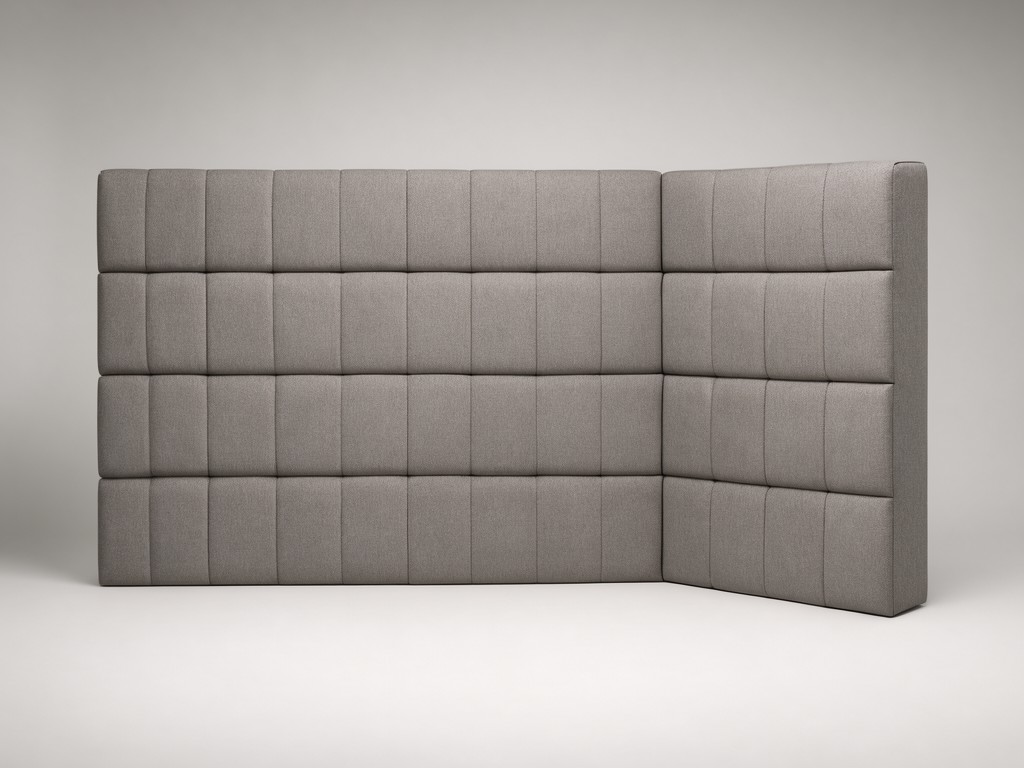
| Rectangular wall panel | 600 × 300 mm to 1200 × 600 mm | 30–80 mm | About 1.5–8 kg |
| Joined headboard set | Made to the approved bed-width layout | Set by panel and mounting design | Quoted from the final bill of materials |
These ranges are starting points, not fixed catalogue dimensions. Final weight changes with backing thickness, foam density, cover fabric, tufting and hardware. Buyers should compare a finished sample with the approved drawing, including seam position, edge radius, total projection from the wall and the gap allowed between modules. Mounting hardware can be supplied as part of the set when its wall type and installation method are defined.
Material Options and Their Trade-offs
Cover wear and cushion shape are the common points of comparison. Woven polyester is available in a broad range of textures and colours, while faux leather wipes clean more easily but can show crease lines or surface wear at contact points. Foam density and thickness affect the hand feel and the way the panel holds its profile; a softer build may feel plush at first yet compress sooner under regular leaning.
Woven fabric cover
Choose this route for a textile look, more texture choices and a soft touch. Confirm rub resistance, colour consistency and fabric direction; a directional weave can look mismatched if panels are cut in different orientations.
Faux leather cover
Select it where wipe-clean care is a priority. Specify the surface finish and colour reference, then review a wrapped sample for corner folds and tension marks; a tight wrap can expose flaws that are not visible on a flat swatch.
Backing choices also affect landed cost. MDF can provide a flat, consistent face for many indoor formats, while plywood may suit a design that needs a different balance of weight and screw-holding behaviour. Neither option removes the need to protect edges from impact in transit. Agree the backing, foam and cover as one sample build, since changing one layer can alter the finished depth and attachment detail.
What Can Be Customised and What Cannot
| Parameter | Options to specify | What needs approval |
|---|---|---|
| Overall form | Panel dimensions, thickness, edge shape and module layout | Dimensioned drawing and finished sample |
| Upholstery build | Cover, foam feel and thickness, seams, buttons or tufting | Hand-feel, seam placement and appearance under room lighting |
| Mounting and retail pack | Attachment method, labels, carton marks and protective packing | Wall compatibility, artwork files and packed-drop handling needs |
A supplier can adjust materials and dimensions, but it cannot preserve the same feel or finished depth after an unreviewed foam or backing change. Lock the visual reference, measurements and mounting points in a signed sample or drawing. Colour is also subject to material and dye-lot variation, so set an agreed approval method rather than relying on a screen image alone.
Requirements by Buyer Segment
Brand product managers usually need repeatable dimensions and colour across several widths or room sets. OEM buyers tend to prioritise drawing control, packing efficiency and predictable reorder specifications. Private-label buyers also need the item to arrive presentation-ready, with correct labels and a carton configuration that suits their distribution channel.
- For a coordinated bedroom range, approve one fabric reference and define which panels share the same foam and backing build.
- For retail replenishment, check that carton dimensions protect corners without leaving excess void space that raises freight cost.
- For projects with local fire or material requirements, provide the destination-market criteria before material approval; requirements vary by market and intended use.
A sample that passes visual review can still fail as a commercial pack if panels rub together or corners crush in transit. Approve the packed configuration as well as the upholstered face, especially for multi-panel sets.
Working as a Production Partner, Not a Catalogue Supplier
An OEM program needs a controlled reference, not just a similar-looking catalogue panel. Keep the approved sample, drawing revision, material choices, colour reference and pack specification tied to the same purchase order. That record gives production and inspection teams a practical basis for checking finished width, thickness, seam position, cover appearance and included hardware.
First-piece review is particularly useful after a change in fabric lot, foam grade, backing thickness or tooling. A replacement material should not be substituted solely because its name appears similar; confirm its hand feel, wrap behaviour and finished dimensions against the approved build. For private-label packaging, submit artwork in the agreed file format and verify the label location on a packed sample before print quantities are released.
Volume Planning and Lead Time
Moving from sample orders to container loads changes the cost balance. Larger runs can spread setup, material purchasing and carton costs across more units, but they also increase exposure to shade drift, storage needs and forecast error. Consolidating common fabric and backing choices across a range can reduce purchasing complexity; custom panel dimensions or separate packaging versions may still require distinct planning.
During a private-label launch with a fixed ship date, the critical path is usually sample approval, material availability, packaging sign-off and production slot confirmation. Lead time should be quoted against those milestones, not treated as a single number before artwork and construction are settled. Share forecast quantities, size mix, destination and target ship window at the quotation stage so the factory can identify which choices affect unit cost or schedule.
For a specification review, send the target dimensions, reference photos or sample, cover preference, mounting method, order mix and delivery market through the OEM inquiry team. Those details allow a factory to compare material and packing options against cost per sellable panel before the order is released.