Specifying factory direct wall moulding wainscoting panels company for Wholesale and OEM Orders
Selection rule: choose panel thickness and profile depth for the wall support and expected contact, then confirm the finished panel weight against handling and freight limits. Deeper profiles and thicker MDF increase rigidity and material use; larger repeat orders can spread profile tooling and setup cost across more saleable units.
What Actually Determines Performance
Weight and stiffness trade off against each other. A thicker MDF panel resists flex between fixings, but adds carrying weight and freight volume; a lighter panel is easier to handle, but needs suitable wall support and a profile that does not leave broad, unsupported areas.
For a typical factory-direct range, MDF is cut and machined to the panel outline and moulding profile, then supplied unfinished, primed, or with a specified coating. The machined grooves create the wainscoting pattern; the remaining face thickness and the distance between fixings govern how much the panel flexes. At corners and cut edges, moisture can enter more readily than through a coated face, so installation and finish details matter in damp cleaning areas. Wall flatness and fixing position also affect whether joints stay even across a run.
Matching the Product to the Buyer's Need
The limiting factor is rarely the headline specification. For an importer, panel size, pack count, edge protection, and finish consistency often set the landed cost per sellable unit. For an academy purchasing manager, it is more often handling weight, repeatable fit across rooms, and how the surface holds up to routine contact.
| Panel format | Typical thickness | Indicative panel weight | Useful for |
|---|---|---|---|
| 600 × 1200 mm | 9 mm | About 4.2–5.2 kg | Smaller room sections and easier manual handling |
| 600 × 1200 mm | 12 mm | About 5.6–6.9 kg | A stiffer option where support spacing allows |
| 1220 × 2440 mm | 12 mm | About 23–29 kg | Cut-to-size production and fewer joints on larger walls |
Weights are estimates for MDF at roughly 650–800 kg/m³; actual figures vary with board density, cutouts, profile depth, and coating. Confirm the chosen format with a finished sample before setting carton quantities or freight calculations.
Customisation Options and Their Limits
Repeat loading drives the failure: repeated knocks on exposed corners, pressure from furniture, or movement at poorly supported joints can chip a finish or open a seam. Panel thickness, groove depth, edge shape, and fixing layout should be selected as a system rather than treated as separate cosmetic choices.
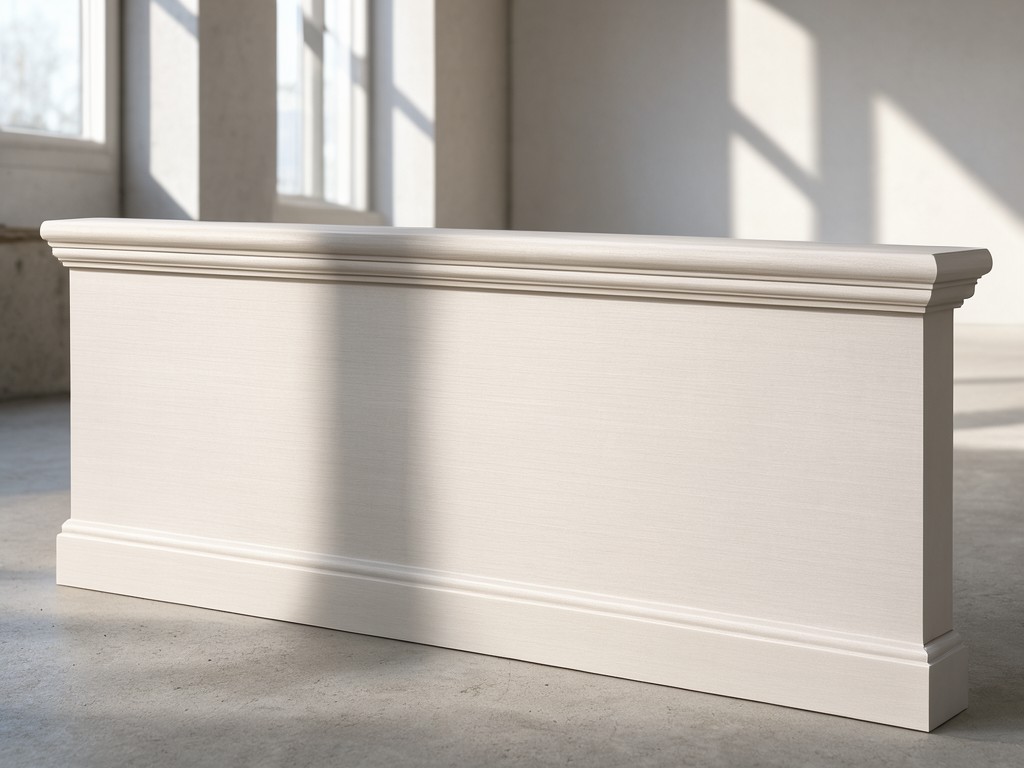
Custom profiles usually require a cutter or dedicated setup. A standard profile keeps the first order simpler; a bespoke groove or moulding can distinguish a private-label range, but tooling and setup are spread over the order quantity. Larger, repeat orders can lower tooling cost per panel and support steadier reorder planning. Small initial quantities may carry a higher unit cost, while new profiles and finishes can add approval time before production. Ask the factory to quote tooling separately from panel price and to state whether approved tooling remains available for repeat batches.
Primer, paint colour, panel dimensions, edge detail, and branded packaging can be specified, but each change has limits. A deep routed line reduces material behind the face; a dark or low-sheen coating can make surface variation more visible; and custom dimensions can change nesting yield and carton layout. Submit dimensioned drawings and finish references together so the approved sample represents the intended production build.
Segment-Specific Requirements
For academy corridors and changing-room approaches, choose a finish that can tolerate frequent wiping and specify how exposed edges will be sealed. Areas near showers or wet floors need a moisture-appropriate material and installation detail; standard MDF should not be treated as waterproof. In reception rooms and member lounges, a lighter profile may be sufficient where direct impact is limited, while consistent colour and matching mouldings matter across multiple rooms.
| Use level | Typical setting | Selection direction | Trade-off to price |
|---|---|---|---|
| Low contact | Club meeting rooms and offices | Standard MDF with a profile suited to the wall layout | Lower material weight, with normal care at edges |
| Regular contact | Academy corridors and reception areas | Consider thicker panels, sound support, and a wipeable coating | More board and coating cost against frequent use |
| Damp cleaning exposure | Changing-room perimeter away from direct spray | Discuss moisture-resistant board, sealed edges, and site ventilation | Higher material cost does not remove the need to keep water off joints |
Care, Storage and Service Life
Store panels flat, dry, and protected from impact before installation. Keep packs away from wet floors and avoid prolonged exposure to large temperature or humidity changes; allow the material to adjust to the room conditions in line with the supplier's installation guidance. Uneven support during storage can leave panels bowed before they reach the wall.
After installation, use a soft cloth and a mild cleaning method suited to the specified finish. Saturated cloths, standing water at bottom edges, and abrasive pads can damage coatings or expose the substrate. Service life depends on board grade, finish coverage, edge sealing, fixing quality, and the room's moisture and contact conditions; agree those conditions before comparing panel prices alone.
Request a sample: compare the actual panel weight, profile depth, edge finish, and coating under your intended lighting before approving a wholesale or OEM run. Include target dimensions, estimated order quantity, packaging needs, and delivery market so the factory can separate tooling, setup, and recurring unit costs.