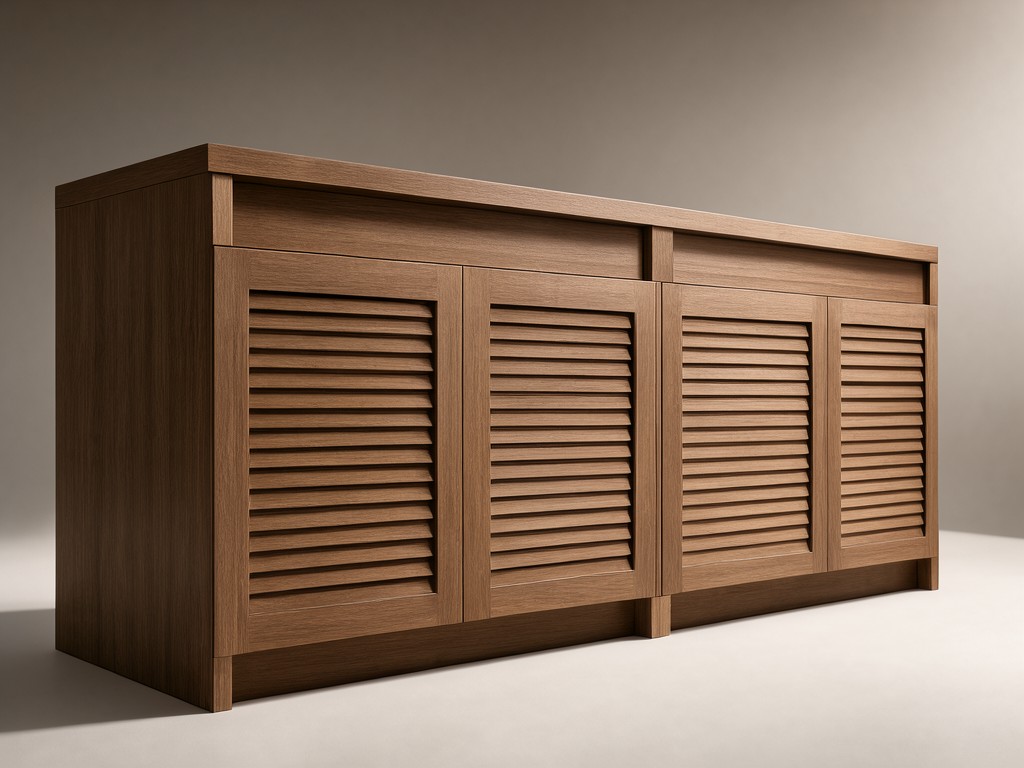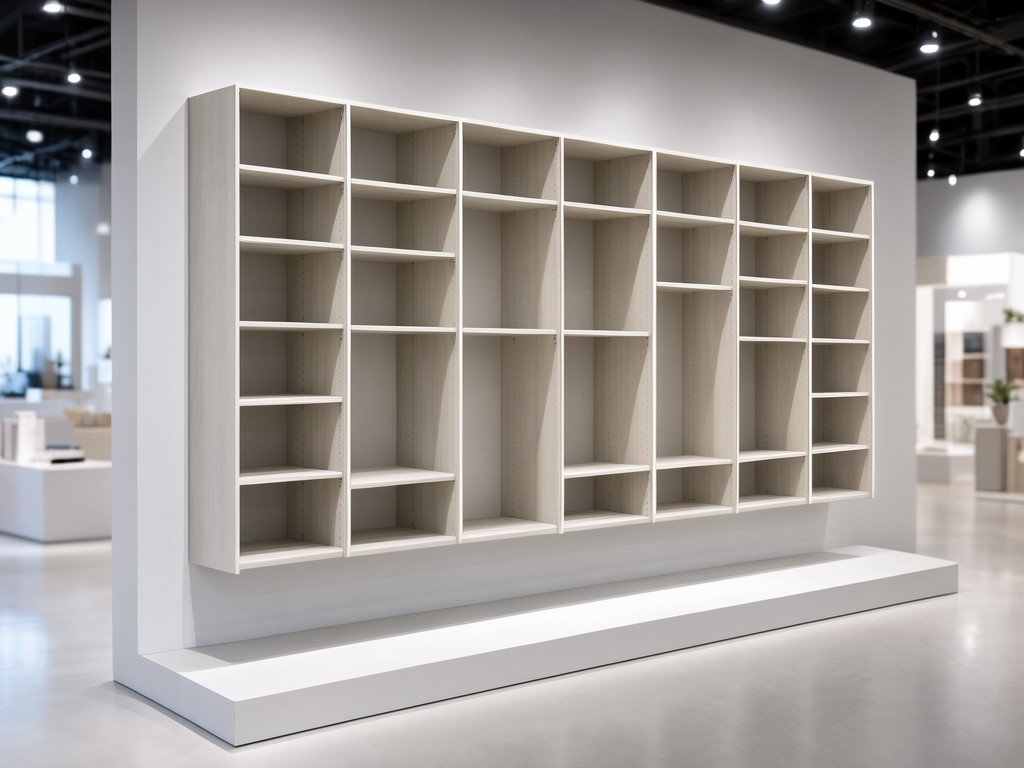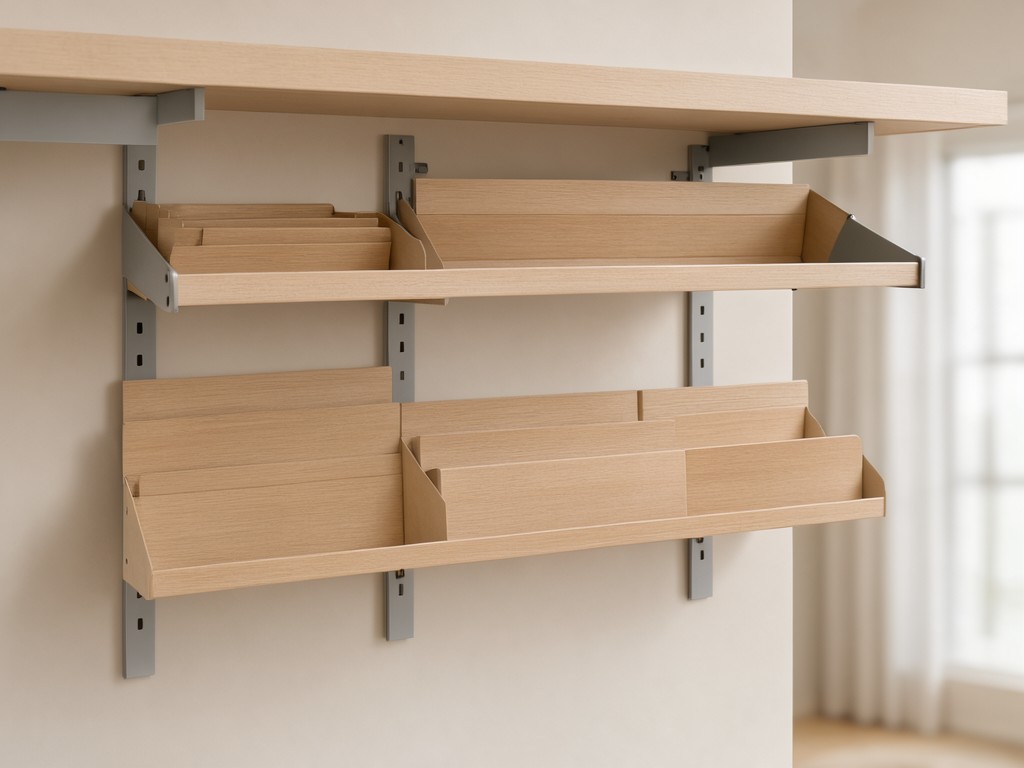
durable washer dryer utility room cabinet solution: What Buyers Should Check Before Ordering
Deflection under load governs the longevity of a utility cabinet in a commercial or high-density residential setting. When a 12 kg appliance sits on a countertop, the substrate must resist bending at the joint interfaces. If the internal framing bows by more than 1.5 mm over a 900 mm span, the sealant between the basin and counter fails, leading to water ingress and substrate swelling. Buyers qualifying a second source often overlook that this deflection is a function of substrate density and frame rigidity, not just the thickness of the top sheet.
The primary failure mode in these environments is delamination caused by humidity cycling. Utility rooms experience rapid changes in vapor pressure from hot dryer exhaust. Standard MDF or low-density particleboard absorbs this moisture, expands, and eventually separates from the laminated surface. A durable solution requires either a moisture-resistant (MR) core or a solid wood frame with a sealed back panel to block capillary action from the wall side.
What Actually Determines Performance
The interface between parts determines the structural integrity of the unit. In a modular cabinet, the corners are the weak points. If the factory relies solely on dowel pins and PVA glue without mechanical fastening (screws or corner brackets), the joints will loosen after approximately 2-3 years of vibration from washing machines. The vibration frequency of modern drum washers is high enough to fatigue wood-to-wood glue lines if the initial torque isn't maintained.
Critical Tolerance Note
Panel cut dimensions must be within ±0.5 mm. A deviation of 1 mm in the back panel cut prevents the 5 mm backer board from seating flat, creating a gap where moisture accumulates behind the cabinet. This gap accelerates wall damage and voids most installation warranties.
Surface durability is judged on abrasion and chemical resistance. The laminate must withstand cleaning agents containing citric acid or chlorine without losing gloss or peeling at the edges. Edge banding is not decorative; it is a moisture barrier. If the edge band is 0.4 mm thick, it may crack under the thermal expansion of the core. A 2 mm ABS edge band offers better dimensional stability and impact resistance, though it increases the unit cost by approximately 4-6%.
How It Is Built and What That Changes
Consistency depends on the automation level of the cutting and edge-banding lines. Manual or semi-automatic saws introduce a tolerance variance of ±1-2 mm, which accumulates across a 5-panel assembly. Automated CNC routing reduces this to ±0.2 mm. For a bulk buyer, this difference means the difference between "adjustable during installation" and "immediate rejection." The latter generates freight return costs that typically exceed 8-10% of the product value.
- Substrate Selection: If the environment is a basement or external utility room, select MR-MDF (Moisture Resistant) or Marine Plywood. Standard particleboard will swell by 10-15% in thickness after 48 hours of direct water exposure, destroying the fit of drawers and doors.
- Frame Construction: A floating carcass (panels floating on top of the frame) allows for minor wall irregularities. A fixed carcass requires perfectly square walls. For retrofit installations in older buildings, the floating design reduces installation labor time by 20-30 minutes per unit.
- Edge Banding Application: Hot-melt adhesive edge banding is standard. For high-temperature dryer rooms, request a high-temp adhesive (rated >150°C) to prevent de-bonding. Standard adhesive starts to fail at 120°C sustained exposure.
- Hardware Integration: Pre-drilled holes must be aligned to within 1 mm. If holes are offset, the hinge cups will not seat correctly, causing door sag. This is the most common QC rejection point in inbound inspections.
Segment-Specific Requirements
Buyers often request a "one-size-fits-all" spec, but the usage conditions vary significantly between commercial laundry facilities and residential utility rooms. Commercial units face continuous 12-hour cycles, high humidity, and heavy foot traffic. Residential units face intermittent use but often have stricter aesthetic and finish consistency requirements.
| Attribute | Residential Utility | Commercial / Heavy Duty |
|---|---|---|
| Substrate | Standard MDF or Particleboard (18mm) | MR-MDF or Marine Plywood (18-25mm) |
| Edge Banding | 0.4-1.0 mm PVC | 2.0 mm ABS or Aluminum Trim |
| Load Rating (Countertop) | 50-80 kg static | 120+ kg static / 200 kg dynamic |
| Hardware | Standard soft-close hinges (50,000 cycles) | Heavy-duty gas struts / Industrial hinges (100,000+ cycles) |
| Finish Tolerance | ΔE < 1.5 (per batch) | ΔE < 1.0 (strict batch matching) |
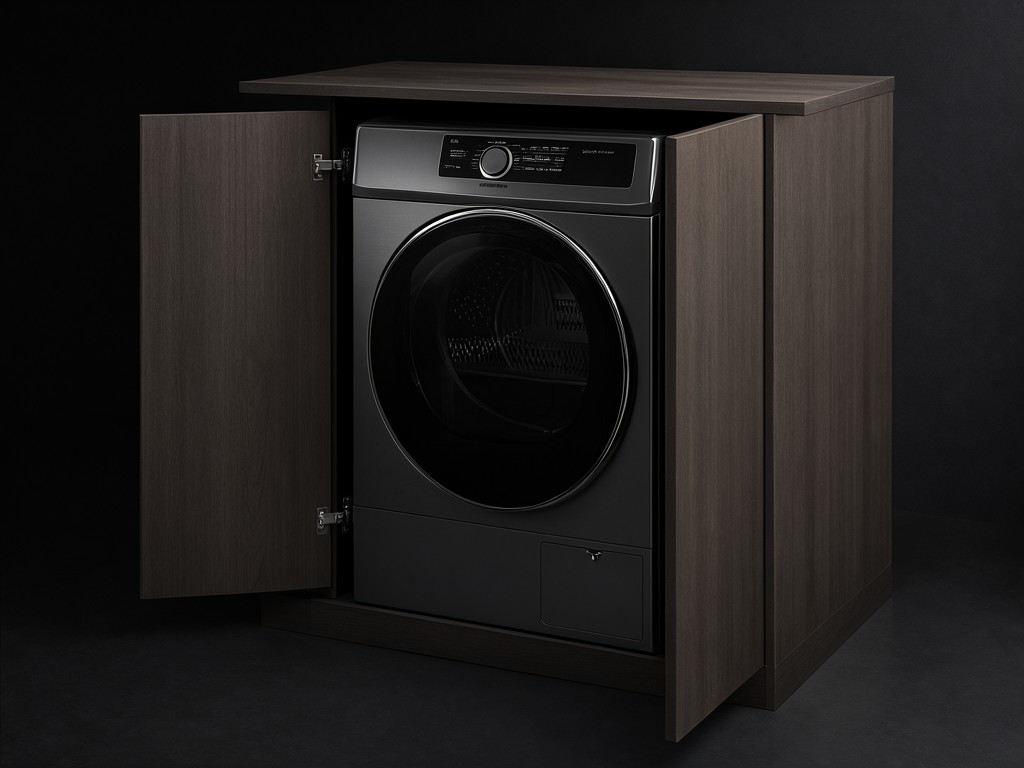
The distinction in finish tolerance is critical for reorders. If the second shipment has a color deviation (ΔE) of >1.5, end-users will perceive it as a manufacturing defect, leading to returns. Specifying strict color matching requires the factory to stock laminate rolls from the same production run for 6-12 months, which impacts pricing due to inventory holding costs.
OEM and ODM Programme Structure
For OEM buyers, the primary value driver is not the cabinet structure, but the precision of pre-drilled hardware holes and the consistency of the laminate pattern alignment. Misaligned grain patterns on adjacent panels are a visible defect that is difficult to rectify post-shipment.
OEM (Your Brand)
- You provide exact CAD drawings and hardware lists.
- Factory manages substrate sourcing and cutting.
- MOQ: Typically 500-1,000 units to justify setup.
- Lead time: 45-60 days from sample approval.
ODM (Factory Design)
- Factory provides standard modular systems.
- Customization limited to color, size, and logo.
- MOQ: 100-200 units (stocked components).
- Lead time: 30-40 days (faster turnover).
The trade-off is clear: OEM offers specific functionality (e.g., integrated dryer vent holes, specific sink cutouts) but carries higher tooling and setup risks. ODM reduces financial risk but limits your ability to differentiate on structural features. For a second source qualification, ODM is often the safer entry point to verify the factory's consistency in edge banding and assembly before committing to a complex OEM design.
What Gets Checked Before Shipment
Inspection must focus on dimensional stability and surface defects. Visual inspection alone misses 60% of structural issues. A third-party inspector or your QA team must perform the following checks on a random sample (typically AQL 2.5 or 4.0).
- Squareness Check: Diagonals of the carcass must match within 3 mm. If diagonals differ by >5 mm, the door will not close flush, leading to user complaints and potential warranty claims.
- Edge Band Adhesion: Use a fingernail or plastic spudger to pull at the edge band corners. Any lifting or cracking indicates poor adhesive application or substrate swelling. This is a critical reject point.
- Hole Alignment: Insert the provided hinge or drawer slide into the pre-drilled holes. There should be no resistance and no visible gap (>1 mm) between the hardware and the wood.
- Laminate Integrity: Check for bubbles, voids, or delamination under the laminate, particularly at the corners. Tap the panel surface; a hollow sound indicates internal delamination.
Packing, Marking and Freight Configuration
Furniture shipping is fragile. The corner is the most vulnerable point during container loading and unloading. Standard packing includes 5-layer kraft paper, corner protectors (EPE foam), and stretch film. For ocean freight, the pallet must be shrink-wrapped and labeled with "This Side Up" and "Fragile" markings.
Marking accuracy is critical for just-in-time delivery. Each carton must bear the batch number, specific SKU, and destination warehouse code. Mislabeling can result in a 2-4 week delay if the container is held for re-sorting. Request a packing list that matches the carton markings exactly to the millimeter.
Freight Configuration Tip
If shipping to a remote area with secondary handling, request reinforced corner blocks (cardboard or plastic) on the outer carton. The cost is negligible (~$0.05 per unit) but reduces corner crush claims by up to 40% in poor-handling logistics chains.
Quotation Review & Next Steps
Qualifying a second source is about risk mitigation, not just cost reduction. Ensure the quotation breaks down substrate cost, labor, and hardware separately. This transparency allows you to audit price increases when raw material costs fluctuate. Do not accept a lump-sum price without this breakdown.
To proceed with a sample request or a detailed quotation review, please contact our sales engineering team. We will provide a full BOM (Bill of Materials) and a test protocol for your specific usage conditions.