durable modern minimalist wood slat wall panel suppliers - Bulk Supply and Specification Guide
Weight and stiffness trade off against each other. For importers qualifying a second source, the practical test is whether panel dimensions, slat spacing and backing adhesion stay consistent without making installation or freight handling harder.
A sample can confirm the appearance; repeat orders expose process capability. Compare the panel construction, define the approved reference sample and check how the supplier controls cutting, bonding and finish across production batches.
Material Options and Their Trade-offs
Choose the substrate against the expected room conditions, panel size and installed support. MDF slats with a wood veneer or decorative laminate suit repeatable profiles and controlled unit cost; solid wood gives a natural material face but needs closer attention to moisture movement and piece-to-piece variation.
- If the priority is a consistent face and repeatable slat profile, start with veneered MDF. Confirm veneer species, face grade and the edge treatment on the approval sample.
- If the panels will see frequent cleaning or higher contact, assess a decorative laminate face. It generally costs more than a basic veneer finish, but the surface is less dependent on a thin natural-wood face.
- If buyers require visible natural grain through the slat edge, consider solid wood. Allow for greater material selection effort and agree how knots, grain variation and moisture-related movement will be handled.
| Construction | Production and cost driver | Buyer trade-off |
|---|---|---|
| MDF slats with wood veneer and felt backing | Repeat slat cutting and fixture-based bonding support consistent spacing; veneer selection and edge finishing affect cost. | A practical balance of natural appearance, profile repeatability and panel handling weight. |
| MDF slats with decorative laminate and felt backing | Face material and edge finishing add cost; stable repeat orders can spread setup and material-change costs across more units. | A wipeable face option, with a less natural surface appearance than real-wood veneer. |
| Solid-wood slats with felt backing | Wood selection, conditioning and grain matching increase handling time and material variability. | Natural grain continues across the exposed slat face, with more movement risk as room humidity changes. |
Specification Range and Customisation Limits
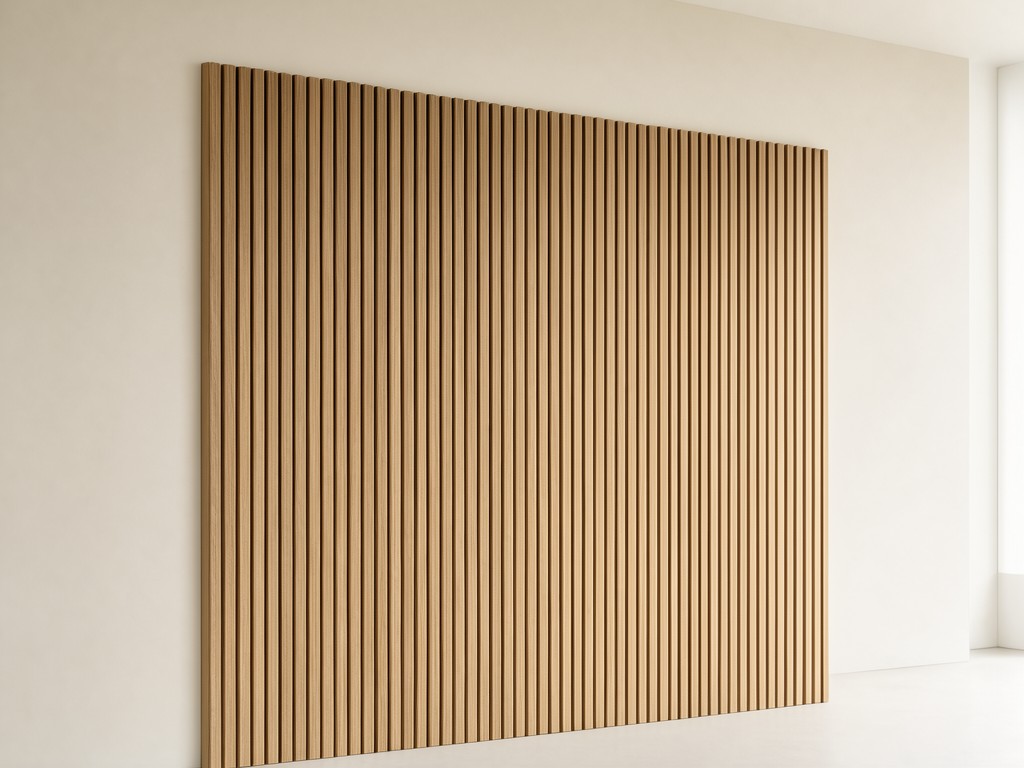
Common panel formats include approximately 2400 × 600 mm and 2700 × 600 mm, while slat widths around 25–40 mm and gaps around 10–20 mm are frequent starting points. Actual ranges depend on the substrate, panel support and the supplier’s cutting and bonding setup. Set final dimensions and tolerances from the approved sample and installation method, not from a catalogue description alone.
The limiting factor is rarely the headline specification. Narrower gaps, deeper slats or a heavier face can change panel mass, fixture requirements and packing density. A new width or face material may also require a setup change; at low order volume, that fixed preparation cost has fewer units over which to spread, while consolidated repeat orders usually improve unit economics.
Before price comparison, align panel size, slat section, gap, backing, face finish, edge detail and packing method. A quote against different build assumptions is not a like-for-like second-source comparison.
How Consistency Is Held Across Batches
Repeat loading drives the failure: slats can loosen from the backing, edges can chip during handling, and panels can arrive out of square if cutting or bonding shifts. A fixed spacing jig and controlled adhesive application help hold slat position. The supplier should also keep the approved substrate, face material and backing specification linked to the purchase order.
For a second-source qualification, request a retained reference sample and batch identification for the incoming materials and finished panels. A change in veneer lot, laminate, felt or adhesive can alter colour, thickness or bond behaviour; agree which changes require buyer approval before production.
Tooling and setup economics matter here. A repeat order using the same profile and fixture avoids some setup work; a new slat section or spacing pattern can require adjustment and a fresh first-off check. Larger releases can spread that preparation cost, but only if the forecast and material commitment are firm enough to support the run.
Inspection Items and Test Methods
Inspection should follow the defects that affect installation, appearance and serviceability. Agree acceptance criteria against the approved sample and the intended wall fixing before the first bulk run.
- Measure panel length, width, thickness and squareness at defined points; check slat width, gap and alignment against the drawing or signed sample.
- Inspect veneer or laminate for visible shade variation, surface marks, lifted edges and damage at corners. Compare finish under consistent viewing conditions.
- Check backing adhesion at selected slats and inspect for gaps, adhesive squeeze-out or movement. Use a documented manual pull check or a defined fixture method agreed with the supplier.
- Review the packing arrangement for corner protection, panel separation and moisture exposure risk during storage and export transit.
Stock Availability and Reorder Planning
Stock is most useful when the panel specification is stable. Ask whether the supplier holds finished panels or only common inputs such as board, veneer, laminate and felt; those are different commitments and carry different exposure to finish changes or material shortages.
Forecasted volume affects both unit cost and production scheduling. Small releases may carry a larger share of setup and material-change costs; consolidated orders can improve nesting and reduce changeovers, but may require more warehouse space and inventory funding. Confirm the reorder trigger, approved substitute rules and whether reserved materials are held for the buyer.
For a tooling review, send the target panel drawing, reference sample, annual demand range and intended order split. Discuss a second-source tooling review before committing to a production run.