custom bedroom wooden wall paneling design factory: Specification, Ordering and Quality Notes
First-article tooling determines groove pitch, edge returns, fixing points and the finished panel dimensions before a production lot is released. For bedroom wall paneling, the factory route typically combines substrate cutting, CNC routing, edge treatment, face finishing and protective packing. A signed first article gives the buyer a physical reference for later checks; without it, small changes in cutter setup or edge finishing can make panels from one order sit unevenly at the wall joint.
Consistency is set at the forming stage when a veneer or decorative face is pressed onto its substrate. Adhesive spread, press conditions and substrate moisture affect bond quality and finished flatness, while sanding and coating determine whether adjoining panels read as one finish under bedroom lighting. Process choice shows up later as visible shade variation, lifted edges or gaps that complicate installation; buyers planning a retail launch should approve the reference finish and panel drawing before the factory reserves materials.
Materials and Construction Trade-offs
Bedrooms usually have less moisture and abrasion exposure than kitchens or bathrooms, but panel edges still take knocks during delivery and fitting. Veneered MDF offers a smooth face for routed details and predictable machining; plywood can be a better fit where screw holding at fixing points matters. A decorative laminate gives a repeatable face appearance and is easier to wipe, though its edge treatment and surface character differ from real wood veneer.
| Construction | Production and appearance | Buyer trade-off |
|---|---|---|
| MDF with real wood veneer | Smooth substrate suits routed profiles; natural grain and shade vary between veneer leaves. | Offers a natural wood face, with added sorting and finish matching needed to control lot variation. |
| Plywood with wood veneer | Layered core supports fixing points; exposed edges need a specified veneer, band or trim treatment. | Can suit panels that require stronger screw retention, with core and face matching affecting cost. |
| MDF with decorative laminate | Printed or textured face supports repeatable colour across a production lot. | More predictable shade matching than natural veneer; edge finish and surface texture must match the approved sample. |
Approve a physical face sample and edge detail together. A face-only approval does not set the appearance of the installed panel perimeter, where mismatched veneer, banding or coating is easy to see.
Where This Product Beats Standard Alternatives
For retail bedroom sets and renovation projects, made-to-drawing panels can align grooves, joint locations and finished edges with the room layout. Standard boards often need site trimming, which adds fitting time and can expose an unfinished edge. The advantage depends on accurate room or product dimensions: a drawing change after cutting starts can leave finished stock unusable or split a single retail launch across different production lots.
Made-to-Drawing Panels
Factory-cut dimensions, routed details and finished edges can reduce site adjustment. They suit coordinated room sets when the buyer freezes the drawing and finish reference before production.
Standard Boards Cut on Site
Stock boards can simplify replenishment and suit one-off dimensions, but installers must manage cut accuracy, edge finishing and offcut waste. Results depend more heavily on site workmanship.
Size, Weight and Specification Range
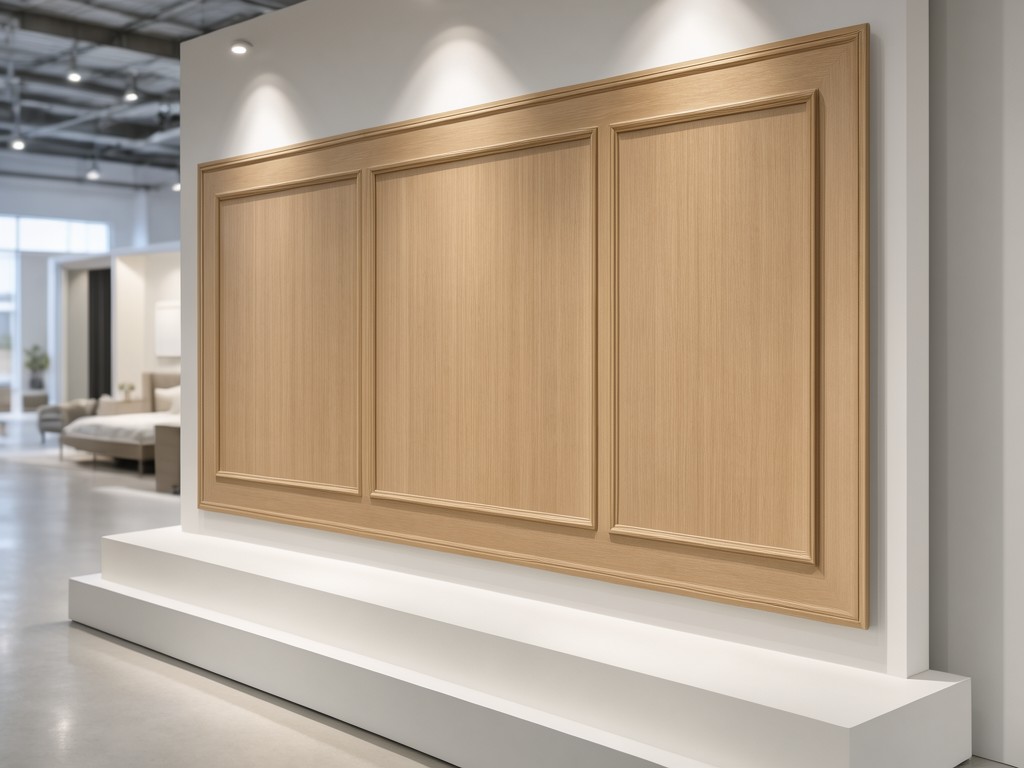
Panel dimensions affect machining time, carton size and the chance of transit damage; thickness and substrate set mass. The ranges below are planning references, not fixed catalogue sizes. Final weight should be calculated from the approved cut list and material build, then confirmed on a production sample before freight is booked.
| Usage level | Typical panel planning range | Specification points to confirm |
|---|---|---|
| Residential bedroom feature wall | Widths commonly planned around 600–1200 mm; heights around 2400–2800 mm; substrate thickness often 9–18 mm. | Finished width and height, groove spacing, fixing method, edge detail, face finish and panel mass. |
| Hospitality or rental bedroom with frequent room turnover | Panel size follows the room elevation; 12–18 mm substrate is often considered where fixing and handling needs call for a thicker build. | Edge protection, replaceable panel sections, cleanability of the selected finish and fixing-point positions. |
Keep the same measuring datum across the drawing, first article and inspection sheet. A width or groove-pitch drift can create visible steps at panel joints and prompt installer rework; finish shade drift can force buyers to hold otherwise saleable stock apart from a matching room set.
Volume Planning and Lead Time
A launch date depends on more than the machine schedule. Drawing sign-off, substrate availability, veneer or laminate matching, sample approval, finish cure time and export packing all sit before dispatch. Confirm the order quantity by finish and panel size early; splitting a run across several small lots can change material availability and make shade control harder.
- Use a signed panel schedule with part numbers, dimensions, edge treatments and quantities per room set.
- Set the sample approval date and drawing freeze date against the required ship window, not only the retail floor date.
- Ask the factory to identify material booking and inspection milestones before confirming the purchase order schedule.
A confirmed production slot is useful only when the approved finish and full cut list are available. If either changes after material allocation, the factory should revise the dispatch plan rather than combine unmatched lots under one shipment.
Export Packaging and Handling Protection
Long panels are vulnerable at corners and finished edges during loading, cross-docking and last-mile handling. Separate face surfaces with suitable interleaving, protect corners, and support each bundle so panels do not bow under their own weight. Carton or crate design should follow the approved panel dimensions and the route’s handling conditions; an oversized bundle that exceeds the carrier’s limits can delay dispatch even when production is complete.
Confirm bundle count, gross weight, carton dimensions and pallet footprint before booking freight. For coated or veneered faces, specify dry packing materials and separation between finished surfaces; trapped moisture or face-to-face rubbing can mark panels in transit.
Questions Buyers Ask Before Ordering
How is lot-to-lot finish consistency checked?
The factory can compare production pieces with the approved physical sample under agreed viewing conditions, and record panel dimensions, groove positions and finish appearance by lot. Natural veneer has inherent grain and shade variation, so buyers should define acceptable variation before placing a repeat order.
Can a finished sample be approved before the full order?
Yes. Approve a first article made with the intended substrate, face material, routed profile, edge treatment and coating. Confirm the approval deadline at order placement because sample feedback that changes the drawing or finish can move the production slot.
What determines the minimum order quantity and dispatch date?
Quantity depends on material purchasing, finish batch size, panel dimensions and the factory’s production plan. The dispatch date should be confirmed after the drawing, finish sample, order mix and packaging requirements are reviewed together.
How should replacement panels be matched to an earlier order?
Keep the original part numbers, material build, finish reference and lot record with the reorder request. Repeat veneer orders may show natural shade differences, so the factory should review available material and provide a new approval sample when a close visual match is required.
Request a Production Sample
Send the panel drawing, target quantity, finish reference and required ship window for a sample and production review. The factory can confirm the material route, first-article checkpoints and packaging dimensions before order release.