Bespoke Residential Whole House Custom Furniture Company - Bulk Supply and Specification Guide
Material choice starts with the conditions the product will meet. In whole-house commissions, the failure mode is rarely a single breakage; it is the cumulative divergence in finish appearance and dimensional stability across different rooms. A buyer specifying a "standard" oak veneer for both a sun-drenched conservatory and a climate-controlled library ignores that UV exposure accelerates chromatic shift by up to 15 delta-E units over five years, while high-humidity basements cause veneer lift and core expansion. To mitigate this, a bespoke residential whole house custom furniture company must specify species and finishes based on room-specific environmental load, not just aesthetic preference.
Consistency in a bulk or multi-room order is often compromised by natural variation in hardwood. If the tolerance for colour variation is tight, mixing batches from different logs is a guaranteed path to visible mismatching upon installation. The solution lies in strict lot control and, for critical pieces, book-matching or symmetrical veneer application. However, this increases material cost and waste rates. The trade-off is clear: paying a premium for pre-matched veneer sheets reduces the risk of client rejection due to visible tonal discrepancies, a complaint that accounts for a significant portion of returns in residential cabinetry contracts.
What the Design Has to Balance
Design specifications for whole-house furniture are not static; they are a negotiation between structural integrity, visual uniformity, and the practical realities of daily domestic use. Doors must swing smoothly for decades without warping, drawer runners must bear weight without sagging, and finishes must resist abrasion from keys, rings, and cleaning agents. A design that prioritizes thin, sleek profiles may look premium in a showroom but often fails in the field when thermal expansion causes joints to gap. Conversely, over-engineered solid wood construction can lead to expensive movement issues in varying climates.
Design Constraint Alert: Moisture Content Equilibrium
All solid wood and plywood components must be conditioned to 8-10% moisture content (MC) before final assembly and finishing. If the MC exceeds 12%, expect warping within the first six months of installation in a standard residential HVAC environment. Specify pre-dried timber or engineered substrates for panels wider than 400mm to minimize internal stress.
The balance shifts further when considering the installation timeline. Whole-house projects often require phased delivery. If components arrive early and sit in unconditioned storage, they can re-absorb moisture, compromising the pre-set joinery. Therefore, the design must account for "on-site tolerance." Looser tolerances (±1.5mm) are safer for final adjustments on site, whereas tighter tolerances (±0.5mm) require perfect storage conditions. Buyers should specify the acceptable dimensional variance based on their site management capabilities.
How It Performs in Use
Performance is judged not by the initial impression but by the state of the furniture after two years of daily interaction. In kitchens and bathrooms, the primary enemy is moisture ingress at the joints. Traditional dovetail joints, while aesthetically pleasing, can allow capillary action if the wood swells and shrinks unevenly. For these high-humidity zones, using waterproof PVA glues or epoxy-based adhesives is non-negotiable. In living areas and studies, the focus shifts to abrasion resistance. High-traffic surfaces near doorways and handles suffer from micro-scratches that accumulate over time.
Hardware performance dictates the longevity of the experience. A 10mm soft-close hinge rated for 50,000 cycles is a different product than one rated for 80,000 cycles. The difference is not just in the number but in the wear pattern of the pin and bushing. Cheap hardware exhibits "creak" within months as metal-on-metal contact occurs due to lubricant depletion. Specifying premium hardware from established industrial suppliers ensures that the mechanical function remains silent and smooth, preserving the perceived quality of the bespoke piece.
Cleaning agents present another subtle threat. Many homeowners use acidic or abrasive cleaners on "wood" furniture, assuming it is impervious. If the finish is a soft film-build lacquer, these agents can etch the surface. A harder, high-solid finish or a properly cured hardwax oil provides a barrier that resists common household chemicals. The specification must explicitly state the chemical resistance level required, which often necessitates a three-coat system rather than a standard two-coat application.
Construction Method and Its Effect on Consistency
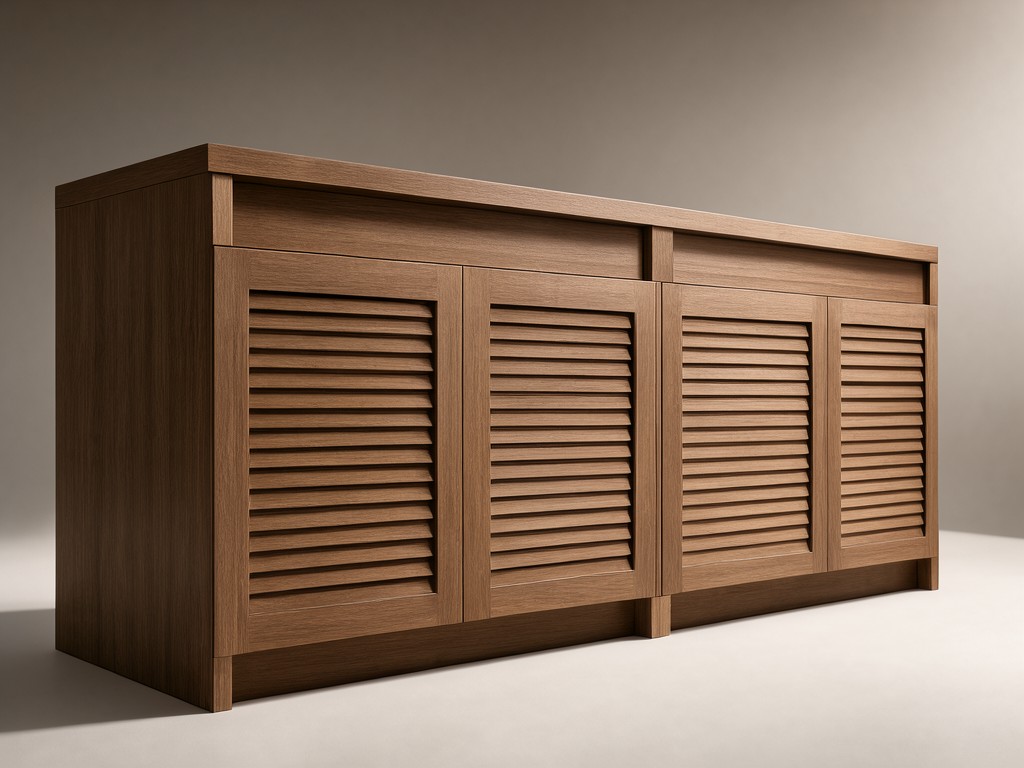
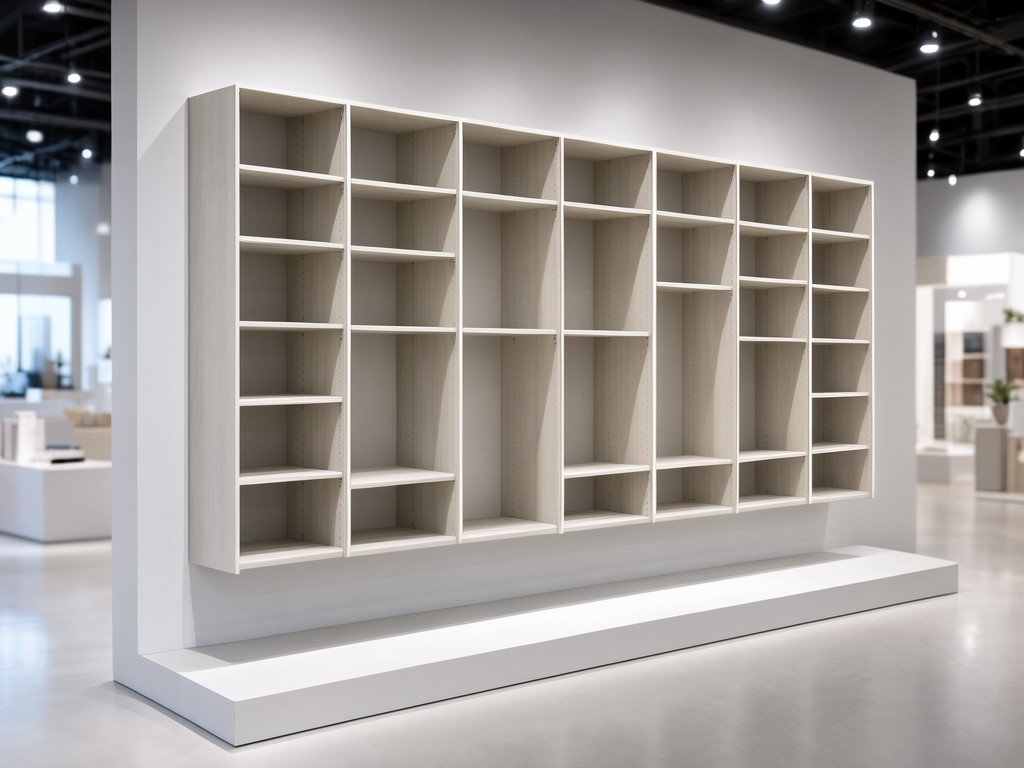
Construction options diverge as soon as weight matters. For large wall units exceeding 2 meters in height, the choice between solid wood, plywood, and MDF core materials significantly impacts the final weight and, consequently, the shipping and installation logistics. Solid wood is visually superior but heavy and prone to movement. Plywood offers dimensional stability and is lighter, but the edge banding becomes a critical finish detail. If the edge banding is not perfectly fused, it will peel, a visible defect that undermines the bespoke perception.
The joining method determines how well the furniture handles thermal expansion. Mechanical joinery (screws, dowels) allows for some movement but can strip if over-tightened. Joinery that relies on glue and mechanical interlock (like dowels or biscuits) is rigid but brittle if the wood moves against the glue line. For bulk production of identical units, CNC machining ensures that every hole is placed with sub-millimeter accuracy, reducing assembly time and the risk of human error. However, for unique, one-off pieces, hand-fitted joinery allows for on-site adjustments that CNC cannot provide.
Finishing is where consistency is most often lost. Spray booth conditions must be controlled for humidity and temperature to prevent runs or orange peel in the lacquer. If a factory switches between spray and wipe-on application methods for different parts of the same piece, the sheen and texture will differ, creating a patchwork effect. A strict production protocol must mandate a single application method for all surfaces of a specific unit to ensure a uniform tactile and visual finish.
Measured Performance in Real Use
To qualify a second source, you need comparative data on how materials behave under identical stress conditions. The following table compares three common construction and finish combinations often specified in residential commissions. The data reflects typical performance metrics after 12 months of standard domestic use, including exposure to UV light (simulated south-facing window), humidity fluctuations (40-60% RH), and mechanical abrasion (standard door handle usage).
| Specification Option | Core Material | Finish System | UV Resistance (Delta-E) | Moisture Swell (24h) | Abrasion Rating |
|---|---|---|---|---|---|
| Option A: Premium Veneer | Birch Plywood (E1) | 3-Coat PU Lacquer | < 2.0 | < 2.5% | High (Resists etching) |
| Option B: Standard Solid | Solid Oak (Kiln Dried) | Hardwax Oil (2 coats) | 3.5 - 5.0 | N/A (Moves with RH) | Medium (Scratch visible) |
| Option C: Cost-Effective | MDF + Melamine | Laminated Surface | < 1.5 | High (>5% if edge damaged) | Very High (Surface) |
The data illustrates the trade-offs. Option A offers the best balance of stability and finish durability, ideal for high-visibility pieces in living areas. Option B provides a natural aesthetic but requires careful maintenance and is susceptible to UV-induced color change. Option C is the most resistant to surface damage but fails catastrophically if the edge is chipped, making it unsuitable for high-impact areas like door edges. Buyers should not assume that "solid wood" is automatically superior; it is often less stable and more difficult to maintain than a well-constructed veneered product.
Size, Weight and Specification Range
Dimensional constraints are dictated by both manufacturing capacity and shipping logistics. Standard plywood sheets are 1220x2440mm. Any component larger than this requires panel joining, which introduces a visible seam or a structural weakness. If a client desires a monolithic slab top exceeding 2.5 meters, the supplier must engineer a join that is invisible and structurally sound. This often requires a steel sub-frame or a specialized glue-up process that adds significant lead time.
Weight limits affect the hardware selection. A solid oak door weighing 15kg requires different hinges than a plywood door weighing 6kg. If the weight specification is not clearly defined in the technical drawing, the supplier may default to standard light-duty hinges, leading to premature sagging. Always specify the maximum door weight and the required cycle life for the hardware. For example, a wardrobe door opening 100 times a day needs a hinge rated for at least 200,000 cycles to ensure 10-year longevity.
Tolerances must be defined per dimension, not just globally. A ±2mm tolerance is acceptable for a rear panel but disastrous for a front-facing drawer face. The specification should list critical dimensions with tighter tolerances (±0.5mm) and non-critical dimensions with looser ones (±2.0mm). This approach optimizes manufacturing cost while ensuring the visible elements align perfectly. Failure to specify this leads to over-machining of all parts, increasing cost without improving the user experience for hidden components.
Requirements by Buyer Segment
High-End Residential Developers
Priority: Zero-defect installation and brand consistency.
These buyers require rigorous pre-shipment inspection (PSI). Every unit must be checked for finish defects, alignment, and hardware function. They often require branded packaging and individual unit serial numbers for traceability. The supplier must have the capability to hold quality standards across large batches, ensuring that the 50th unit looks identical to the 1st.
Interior Design Firms (OEM)
Priority: Design fidelity and sample approval speed.
These buyers often provide 3D models or CAD files. The supplier must have the capability to interpret these files accurately and produce a physical sample for approval within 2-3 weeks. They value flexibility in material substitution if a specific veneer is unavailable, provided the visual match is maintained. Communication speed is as critical as manufacturing quality.
For both segments, the risk of single-sourcing is high. If the primary supplier faces a raw material shortage or a production delay, the entire project timeline slips. Qualifying a second source requires sharing detailed technical specifications, not just images. The second supplier must be able to match the finish, hardware, and dimensional tolerances exactly. This often involves sending a physical sample and the original BOM (Bill of Materials) to the secondary supplier for a trial production run.
Working as a Production Partner, Not a Catalogue Supplier
A bespoke residential whole house custom furniture company acts as a production partner when it engages in value engineering. If a client specifies a complex curved veneer that is difficult to source and expensive to apply, a partner will suggest an alternative material or construction method that achieves a similar visual effect with greater consistency and lower cost. This requires deep knowledge of material properties and manufacturing constraints.
OEM/ODM service involves more than just painting the client's logo on the product. It includes developing the tooling for unique hardware, creating custom moulds for soft-close mechanisms, and managing the supply chain for exotic materials. The supplier must handle the IP (Intellectual Property) of the designs strictly. Confidentiality agreements are standard, but the physical security of the samples and digital files must be verified. Data loss or leakage of proprietary designs to other clients is a critical risk that must be mitigated through contractual and physical controls.
Collaboration on lead times is also key. Instead of a fixed "30-day lead time," a partner will provide a breakdown of the schedule: 5 days for material procurement, 10 days for CNC cutting, 5 days for finishing, 5 days for assembly, 5 days for packaging. This transparency allows the buyer to identify bottlenecks and intervene early if a material is delayed. It transforms the supplier from a black box into a visible part of the project management chain.
Export Packaging and Handling Protection
Packaging is the first line of defense against transit damage. Standard palletization is insufficient for high-value finished furniture. Each unit must be wrapped in bubble wrap or foam padding to protect corners and edges. The packaging must be designed to withstand stacking loads of at least 1.5 times the weight of the unit. If the buyer plans to ship via container, the packaging must be optimized for cube efficiency to reduce freight costs.
Labeling is critical for multi-room installations. Each box must be clearly labeled with the room name, unit code, and installation sequence. For example, "Kitchen - Upper Left - Step 1." This allows the installation team to unpack and assemble in the correct order, reducing on-site confusion and errors. QR codes on the boxes can link to digital assembly instructions and component lists, enhancing the user experience and reducing support queries.
Moisture protection during shipping is also vital, especially for long sea voyages. The packaging should include desiccant packs to absorb any condensation that forms inside the container. This prevents mildew and finish damage during transit. The buyer should specify the required humidity control level in the packaging specification. A well-packaged unit should arrive in the same condition as it left the factory, with no visible scratches, dents, or moisture damage.
Ready to Qualify a Second Source?
We invite you to submit your current BOM and technical drawings for a tooling review. Our engineering team will analyze your specifications for manufacturability, suggest cost-saving alternatives, and provide a detailed quotation for a trial batch. This step ensures that our production capabilities align with your quality and timeline requirements before any long-term commitment is made.
Contact Our Technical Sales Team for a Free Tooling Review