affordable floating wall mounted closet system low moq: What Buyers Should Check Before Ordering
Repeated loading drives the failure points in a floating closet system: shelf supports loosen, panel holes wear, and long shelves begin to sag if the span and bracket layout do not match the intended load. For an OEM buyer qualifying a second source, the useful comparison is not just unit price. It is whether the factory can hold panel dimensions, drilling positions and hardware fit across repeat batches, so installation issues do not turn into returns or warranty claims.
What the Design Has to Balance
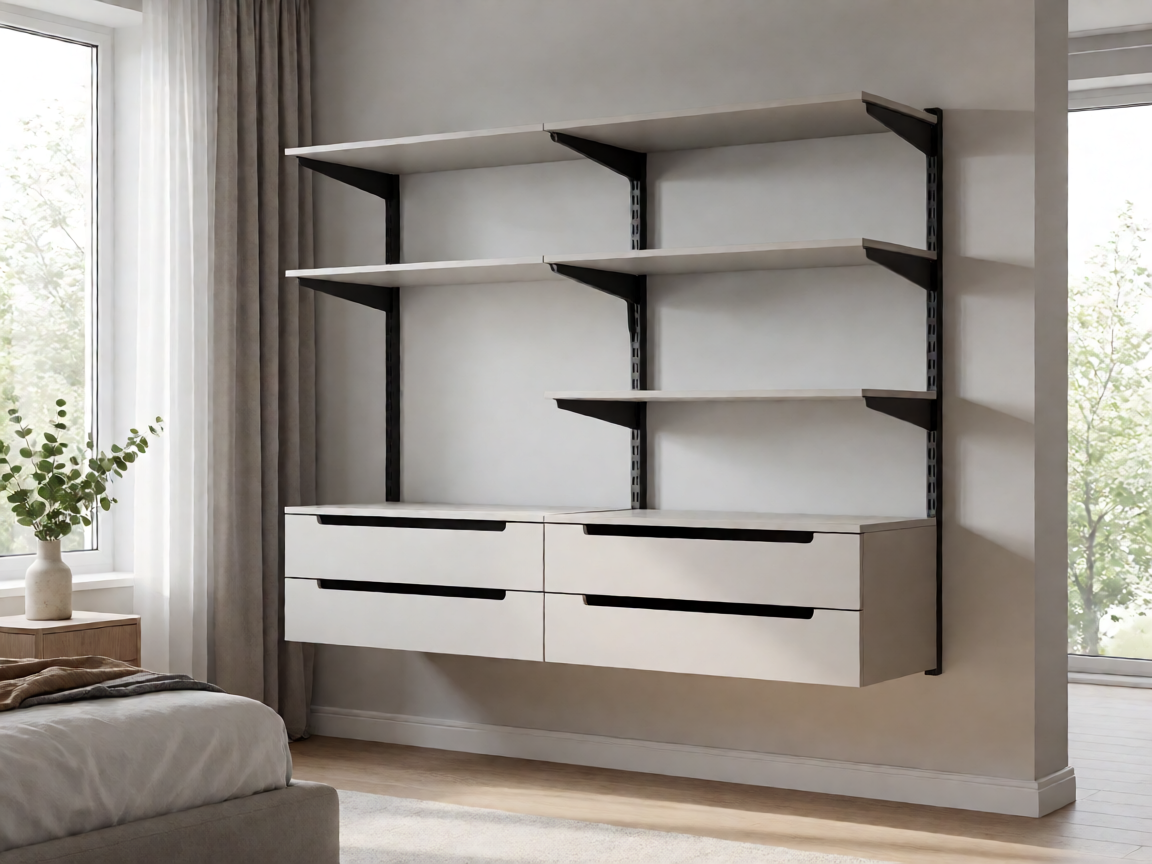
Weight and stiffness trade off against each other. Thicker panels and closer support spacing can limit visible deflection, but add material, freight weight and installation effort. A lower-cost melamine-faced particleboard panel can suit a residential closet with moderate shelf spans; heavier storage or longer spans may justify a denser panel specification, a reinforcement rail, or another support point.
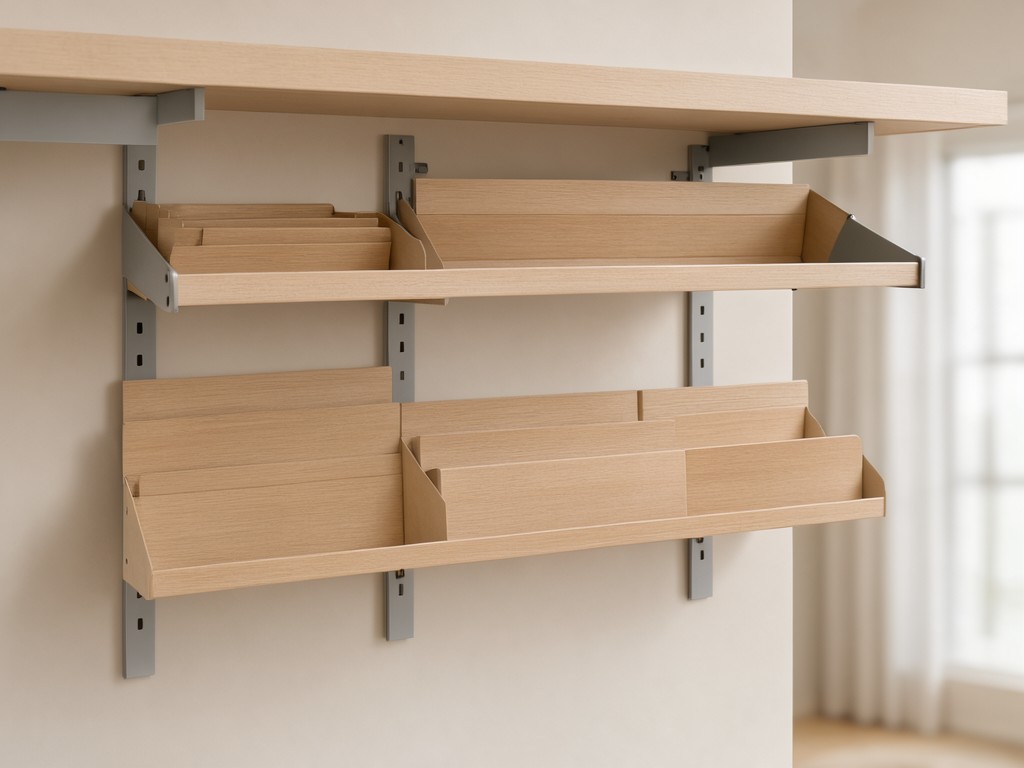
The system should be specified as a set: shelf depth and span, panel thickness, bracket geometry, hanging-rail position, and the intended wall type. A bracket's capacity is not a standalone product figure. It depends on the fastener, wall structure, spacing and installation method, so the factory and buyer should agree on the test setup and stated use limits before artwork or sales claims are final.
Option Comparison by Usage Level
Entry Configuration
Melamine-faced particleboard panels with a standard powder-coated steel rail and brackets keep component cost down. This option fits shorter shelf spans and everyday clothing storage. Keep the panel finish and edge treatment consistent across the range; exposed or poorly bonded edges are more likely to chip during assembly and service.
Higher-Use Configuration
For frequent access or heavier stored items, consider a stiffer panel option, reinforced shelf support or closer bracket spacing. These changes add cost and may affect the package size, but can reduce sag complaints and replacement-part demand when the system is used daily.
Ask the supplier to quote the options against the same layout and finish. A meaningful comparison includes the full hardware set and agreed wall-fixing method, not a panel-only price beside a complete-system price.
Who Uses It and Where It Matters
- Apartment residents use compact wall-mounted layouts where floor space is limited; adjustable shelf positions and clear installation instructions matter when the wall construction varies between units.
- Property managers choose systems for rental turnovers, where replaceable brackets, rails and shelf panels can make a local repair less costly than replacing a complete closet.
- Retailers and private-label brands need repeatable panel colour, edge finish and hardware appearance across replenishment orders, especially when customers add matching sections later.
- Importers qualifying a second source should compare assembly fit and installation time alongside landed unit cost; small differences in hole location or supplied fasteners can create avoidable service calls.
How Consistency Is Held Across Batches
Fatigue appears at the stress concentration: bracket contact points, shelf holes and rail joints see repeated force. A production check should therefore cover the assembled interface as well as loose component dimensions. The table sets out useful checks to agree before sample approval.
| Area | Factory Check | Why It Matters |
|---|---|---|
| Panel size and squareness | Measure cut dimensions, diagonals and edge condition against the approved drawing. | Out-of-square panels can make the finished layout difficult to align. |
| Drilling and hardware fit | Check hole position and diameter, then assemble a sample with the production hardware. | Misaligned holes or changing fastener fit can loosen joints or slow installation. |
| Shelf and bracket loading | Use an agreed span, fixture and load sequence; record deflection and any movement at the fixing points. | Results only apply to the tested configuration and wall-fixing setup. |
| Finish and colour | Compare panels and coated metal parts with the retained approved sample under consistent viewing conditions. | Visible variation between replenishment batches can trigger retail complaints. |
For second-source approval, freeze the drawing revision, finish references, bill of materials and inspection points together. Retain a signed sample and record batch identification so a later claim can be checked against the actual production lot.
Capacity, Tooling and Scheduling
Low MOQ is easiest to support when the design uses existing panel-processing equipment, standard metal sections and shared hardware. A custom profile, unusual finish or dedicated cutting fixture may require setup cost or a higher minimum. Confirm which parts are standard, which are order-specific, and what minimum applies to each colour or configuration.
Production timing depends on panel and hardware availability, finish batches, sample approval and the number of variants in the order. For a second-source launch, qualify one representative configuration first; adding several panel colours and rail lengths at once can divide a small order into uneconomic runs. Request a schedule with approval, production and repeat-order assumptions stated separately.
Keeping Repeat Orders Supplied
Control the Revision
Keep drawings, finish references and component substitutions under revision control. Do not treat a visually similar bracket or panel as interchangeable until fit is checked.
Plan Common Parts
Use common rails, brackets and fasteners across compatible sizes where the design allows. Fewer unique parts make replenishment easier to coordinate and reduce the chance of a discontinued component stranding finished stock.
Review Batch Records
Track lot quantities, inspection results and approved substitutions. This gives the importer a clear basis for reorder checks and helps isolate the source of a service issue.
A second source reduces single-supplier exposure only if the approved specification remains current and the factory can reproduce it. Agree how the supplier will notify you before material, finish or hardware changes reach production.
Setup, Use and Replacement Parts
Installation conditions set the system's practical load limit. The mounting method must match the wall structure; a fixing selected for masonry may not suit a hollow wall, and a bracket should not be installed into unsupported board unless the approved design and fixing method allow it. Provide clear instructions on locating structural support, levelling the rail and using the specified fasteners.
For serviceability, identify shelves, brackets, rails and fastener packs as replaceable components. A cracked or chipped panel should be replaced rather than patched as a structural repair. Check bracket seating and fasteners during normal household maintenance, and stop use if the rail shifts, a fixing loosens repeatedly or a shelf shows increasing deflection.
Questions Buyers Ask Before Ordering
Can the system be supplied at a low MOQ with more than one finish?
Often, but the minimum may differ by panel colour, metal finish and configuration. Ask for the MOQ by component and variant, plus any setup charge tied to a custom finish.
What should a second-source sample prove?
Check panel dimensions, hole positions, edge finish, hardware fit and assembly against the approved specification. If load claims are planned, agree on the fixture, wall type, shelf span and test procedure before sample testing.
Can replacement parts be ordered without a full closet set?
Confirm which parts the factory can sell separately, how each part is identified and whether hardware remains compatible across revisions. Keeping common components in the range can simplify warranty service.
How should the private-label version be approved?
Approve the final finish sample, product drawing, component list and any user-facing load or installation statements before the production order.
Discuss a Second-Source Project
Share your target layout, panel and finish preferences, planned order quantity, and the checks you use for supplier approval. A project review can clarify the sample scope, MOQ by variant and repeat-order controls before you commit to production. Contact us to discuss the specification.