wholesale freestanding french country bathroom vanity factory: What Buyers Should Check Before Ordering
Consistency is set at the forming stage: panel moisture, machining accuracy, and door-frame fit affect how a freestanding vanity holds its gaps after repeated bathroom humidity cycles. Painted moisture-resistant MDF can keep profiles and colour costs controlled; plywood or solid-wood components raise material cost but may suit ranges where exposed edges and repairability matter more. Neither construction makes a cabinet waterproof.
Specification Range and Customisation Limits
Returns often start with dimensions that were approved for the cabinet alone but not checked against the basin, top, tap position, or plumbing clearance. Common freestanding widths run from about 600 to 1,800 mm, with cabinet depths around 450–560 mm and cabinet heights commonly near 800–900 mm before the countertop. Actual proportions depend on the selected top and basin, so confirm the finished floor-to-top height on the approved drawing.
French country details—beaded door frames, turned legs, mouldings, and aged-look hardware—add machining, assembly, and finishing steps. More relief in the profile also creates edges where dust and cleaner residue can collect. A simpler profile is usually easier to wipe down and costs less to reproduce across repeat orders; custom colour matching and non-standard mouldings require a signed sample or finish reference before production.
| Construction choice | Buyer trade-off | Points to confirm |
|---|---|---|
| Painted moisture-resistant MDF panels | Supports shaped fronts and consistent painted surfaces at a controlled unit cost. Swelling can occur if water reaches an unsealed edge or joint. | Edge sealing, coating coverage around profiles, and care instructions for standing water and abrasive cleaners. |
| Plywood carcass with selected solid-wood details | Can offer a stronger basis for exposed edges or repairable trim, with added material and finishing cost. Natural grain and wood movement need tighter colour and moisture control. | Species and veneer match, panel thickness, joint design, and acceptable variation in grain and stain tone. |
Usage Scenarios and Buyer Segments
In owner-occupied bathrooms, the cabinet typically sees daily handwashing, occasional splashes, and routine wipe-downs with household cleaner. The finish needs sealed edges and a care guide that discourages scouring pads and prolonged water exposure. For family bathrooms, drawer access and door alignment are frequent sources of service calls; buyers should specify hardware and interior clearance around the actual plumbing layout.
Retail buyers often need a coordinated size and colour range with clear carton identification, while brand product managers may prioritize exclusive mouldings, hardware, or paint colours. Hospitality refurbishments can face faster turnover and more frequent cleaning, so simpler profiles, replaceable hardware, and finish samples tested against the intended cleaning routine may reduce maintenance disputes. Bathrooms with direct sun exposure also need a finish sample reviewed for likely colour shift; no paint finish should be represented as immune to UV fading.
Segment-Specific Requirements
Repeat-order risk differs by channel. A retail programme needs stable colour and hardware across replenishment lots, plus carton marks that distinguish widths and finishes at receiving. A private-label range may accept a longer approval path for a custom profile or colour, but the approved control sample, finish code, and drawing revision must remain linked to the purchase order.
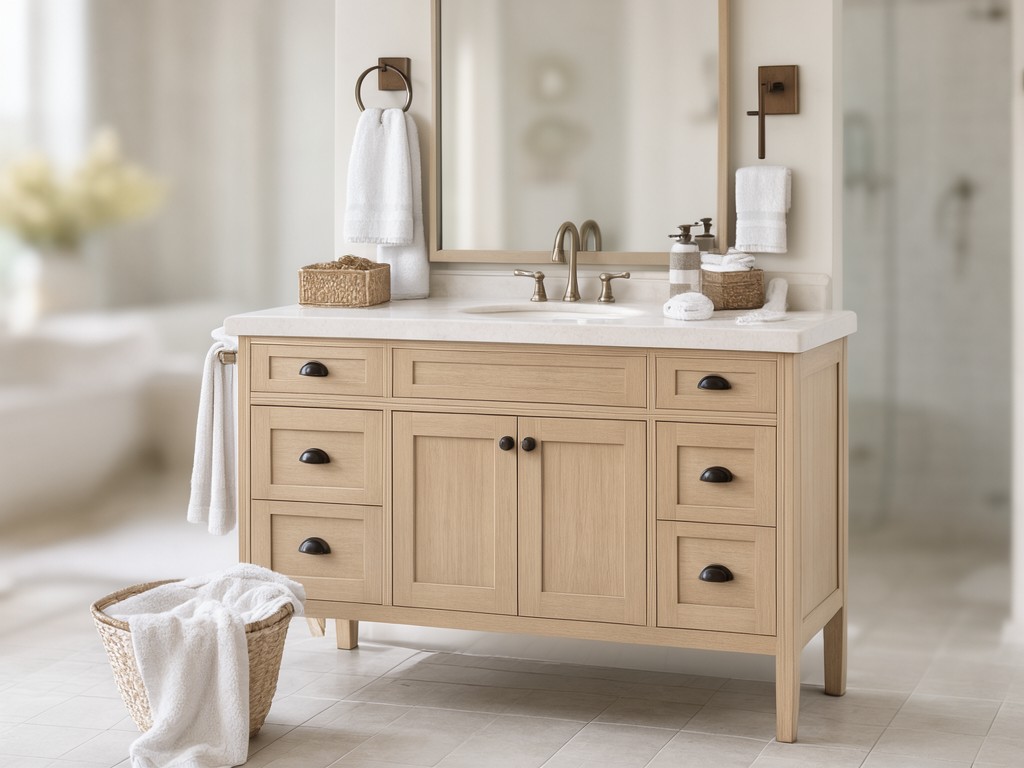
For humid or frequently cleaned rooms, specify the cleaning products and exposure pattern before finish approval. The coating can resist routine wiping when applied over properly prepared surfaces, but joints, cut-outs, and unsealed edges remain vulnerable to standing water. Ask the factory to identify the maintenance limits in the care sheet rather than relying on a broad “water-resistant” claim.
What Gets Checked Before Shipment
Process choice shows up later as door gaps that vary, drawers that bind, or paint rubbed through at a moulded edge. A shipment inspection should compare cabinet width, depth, height, diagonals, and key opening dimensions with the approved drawing. Inspectors can also check that doors sit evenly, drawers travel without catching, and hardware is present and fitted in the agreed positions.
Finish review should cover colour against the signed sample under consistent lighting, visible pinholes or runs, coverage at corners, and coating damage around handles and edges. Where a buyer needs a defined adhesion or cleaning-resistance check, agree the test method and acceptance criteria before the production lot; test conditions should reflect the specified finish system. Keep inspection records tied to the lot and retain a reference sample to help assess repeat-order variation.
Volume Planning and Lead Time
Custom paint, carved trim, and mixed cabinet-top configurations affect setup and purchasing more than a standard size in a repeat colour. Confirm order quantity by width, finish, basin cut-out, and hardware set; a combined headline volume does not remove the need to plan each SKU. Production timing should be agreed after drawings, finish samples, and packaging details are approved, since late changes can reset material ordering or finishing schedules.
| Packaging decision | Why it matters | Confirm before production |
|---|---|---|
| Cabinet and stone or ceramic top packed separately | Separating heavy or brittle components can reduce impact transfer and simplify handling, but creates multiple cartons per set. | Carton count, set identification, top protection, and instructions for matching cartons at receiving. |
| Foam or corner protection around cabinet edges and mouldings | Freestanding legs and projecting trim are vulnerable to knocks during pallet movement and container handling. | Protection points, carton dimensions, pallet layout, and whether retail labels must remain visible after palletising. |
Before booking freight, review a packed sample or packaging specification for carton fit, edge protection, and the separation of fragile tops from cabinet frames. If the range ships to multiple destinations, agree carton marks and SKU labels early; relabelling mixed cartons at the warehouse adds handling and increases picking errors.
For a quotation review, send the target dimensions, construction preference, finish reference, basin and top details, estimated quantity by SKU, and delivery-market packaging needs. Request a specification and quotation review before approving samples or committing to a repeat-order schedule.