oem modern bathroom vanity cabinet china supplier: Specification, Ordering and Quality Notes
Total cost of ownership shifts once bathroom vanity returns are counted. A cabinet that arrives with swollen edges, a misaligned drawer front or chipped corners may cost less to purchase, but the replacement, freight claim and missed retail window raise the cost per unit sold. For wholesale and private-label programs, the specification needs to control both bathroom-use exposure and the damage risks of export handling.
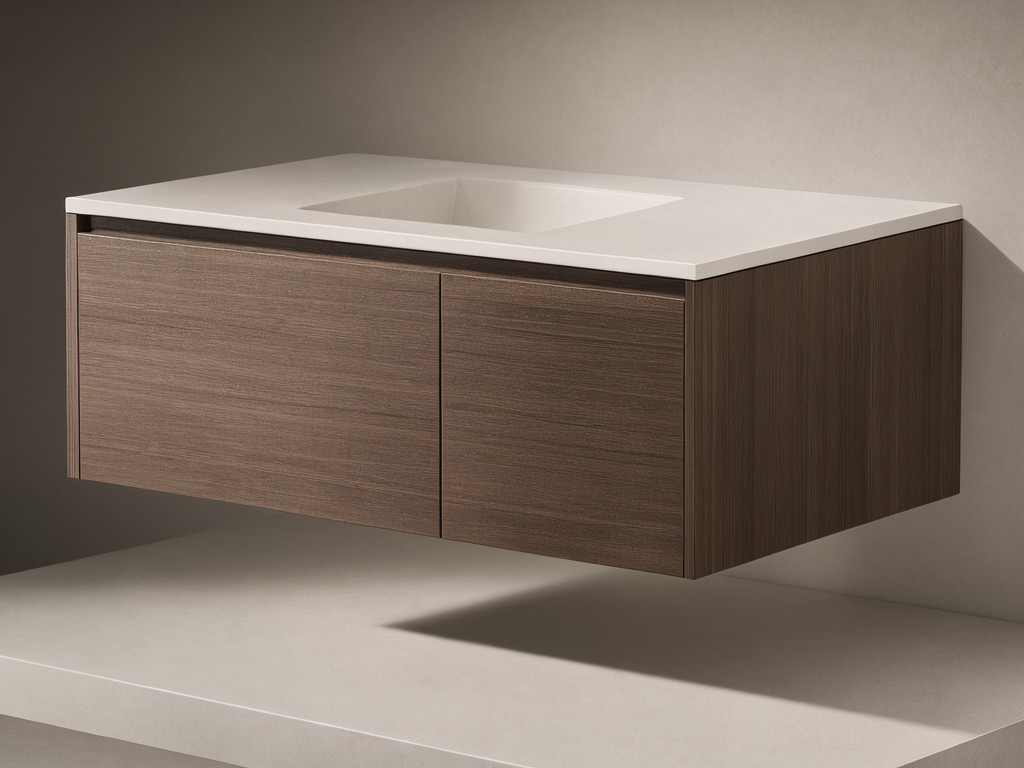
The practical starting point is the room and installation: wall-hung or floor-standing, width and depth, basin cut-out or top-mount arrangement, plumbing clearance and expected splash exposure. Those choices affect panel layout, hardware positions, carton design and assembly time. A China OEM supplier can usually adapt dimensions and finishes, but each change can alter tooling, minimum order economics and repeat-order consistency.
Design Constraints Behind the Specification
In compact bathrooms, a few millimetres at the cabinet sides can decide whether the unit clears a door, pipe chase or adjacent fixture. Set the finished width, depth and height against the installation drawing before approving the panel breakdown. For wall-hung models, the wall fixing method and cabinet back construction must suit the intended substrate; the cabinet should not be treated as a substitute for suitable wall reinforcement.
Drawer boxes need usable clearance around the trap and supply lines. A deep drawer may look efficient on a specification sheet but can collide with plumbing after installation. Confirm the basin type, tap position, overflow arrangement and plumbing envelope on the same approved drawing, then freeze those interfaces before production tooling or drilling programs are released.
What Actually Determines Performance
Bathroom cabinetry is not waterproof. Repeated splash contact, standing water at joints and a slow plumbing leak can swell exposed board edges even when the visible face remains intact. Specify sealed edges and suitable surface protection, and make clear that leak exposure is outside normal cabinet service conditions.
Drawer alignment, door gaps and hardware movement are the complaints buyers tend to see first. Hole position and panel squareness matter as much as the slide or hinge grade: inconsistent drilling can leave a good mechanism binding or a door sitting proud. A sample approval should include the assembled cabinet, not just a finish chip, so fit and clearances can be checked together.
The useful performance checks are dimensional verification, diagonal or squareness checks, repeated opening and closing of drawers and doors, and a visual review of edge adhesion and finish. Agree inspection points and acceptance limits before the purchase order; a vague request for “matching the sample” is difficult to apply across a production batch.
Materials and Construction Trade-offs
Substrate selection is a price and exposure decision, not a finish decision alone. The cabinet’s edges, internal faces and drilled openings determine how readily moisture can reach the core. Set the required substrate and edge treatment by panel location; using the same grade everywhere may add cost where it brings little benefit, while under-specifying sink-side parts creates avoidable claims.
Engineered Board with Decorative Surface
Melamine-faced or laminated board can keep a flat-pack program cost-conscious and offer repeatable colour across a run. Its value depends on edge sealing and careful handling at cut-outs; a chipped edge or unsealed bore exposes the core to bathroom moisture.
Plywood or Higher-Specification Panels
Plywood can suit programs where screw holding, panel stability or greater moisture tolerance is prioritised, but the cost rises and surface preparation may differ. Confirm the face finish, core, edge treatment and hardware fixing method as a complete construction, rather than buying by the material name alone.
PVC edge banding, applied veneer and painted finishes each create different repair and colour-matching expectations. Specify visible faces, interior faces and edge thickness by location, then approve a production-representative sample under consistent lighting. If the vanity is supplied with a countertop or basin, define whether those parts are factory-fitted, packed separately or sourced to the buyer’s own specification.
How It Is Built and What That Changes
Panel-based vanity production commonly runs from board preparation and CNC cutting through edge banding, drilling, finish work and assembly checks. CNC programs can hold repeatable hole positions once the drawing and tooling are approved. Changes to drawer layout, hinge location or cabinet width after that point can require new programs, sample approval and added setup cost.
Edge banding is a frequent failure point when adhesive coverage, temperature or panel cleanliness is inconsistent. A weak bond may open first near a sink cut-out or exposed end, where water and cleaning contact are more likely. Production checks should therefore look at corners, joints and cut edges rather than relying only on a front-face appearance review.
Pre-assembly can reveal fit issues before export, while knock-down packing can reduce freight volume and simplify warehouse handling. The trade-off is that flat-pack units depend on clear instructions, labelled parts and correct fasteners at destination. Include assembly validation in sample approval if the buyer’s returns process covers consumer installation problems.
Buying Mistakes That Lead to Returns
Returns often begin with an interface that was assumed rather than documented. A cabinet may be the right nominal width and still fail at installation because the waste outlet, tap tails or skirting profile were not included in the drawing review. Confirm the installation envelope and handedness for every model before artwork and carton labels are approved.
- Do not approve colour from a screen image alone; batch variation between board, edge band and painted components can be visible after assembly.
- Avoid specifying only “moisture-resistant board.” Name the substrate, face finish, edge treatment and locations where exposed edges or bores require sealing.
- Check the carton against the assembled product’s vulnerable corners and projecting hardware. A strong cabinet can still arrive unsalable after a corner crushes through inadequate internal protection.
- Treat a sample that uses different hardware, board thickness or finish application from the production order as a visual reference only, not as production approval.
What Can Be Customised and What Cannot
Width, height, depth, door and drawer layout, finish colour, handle choice, hinge and slide selection, logo placement and packaging artwork are common OEM variables. The more a design departs from the supplier’s existing panel and hardware layout, the more likely it is to require dedicated setup, a new prototype or a different order quantity to make the unit cost work.
Tooling amortisation decides whether a custom profile or one-off drilling pattern pays back over the forecast volume. Keep standard panel dimensions and hardware where possible if the priority is a lower landed cost per unit sold. Structural limits still apply: a requested drawer arrangement cannot ignore plumbing clearance, and a finish choice cannot compensate for an exposed, poorly sealed core.
For private-label runs, provide vector logo files, print or label placement, carton language, barcode data and the approved colour reference before the production sample is signed off. Confirm which changes affect the sample, which affect the unit price and which need fresh artwork or packaging approval.
Quality Control and Batch Consistency
A batch can pass a face-colour check and still produce returns from loose edge banding, skewed doors or transit damage. Inspection should follow the product through panel machining, assembly and packing. Keep an approved sample and a written specification tied to the purchase order, including the hardware model, finish reference and carton configuration.
At incoming or pre-shipment inspection, sample assembled units for overall dimensions, panel alignment, door gaps, drawer movement, surface marks and edge adhesion. Check that fastener packs, instructions and identification labels match the approved version. Agree how defects are recorded and how a nonconforming batch is handled before the first production run.
Stock Availability and Reorder Planning
Cheaper stock options fail at the worst point in the season when a restock changes board colour, hardware finish or carton protection. Before launch, separate standard components that the supplier can replenish from custom parts that depend on a new production run. Keep the approved finish reference and bill of materials available for reorder checks.
Export packaging should protect panel corners, finished faces and loose hardware without adding avoidable freight volume. Confirm the final pack configuration with a packed sample or packing specification, especially for flat-pack units where the carton itself carries stacking loads during transport and warehouse storage.
| Packaging item | Specification to confirm | Why it matters |
|---|---|---|
| Outer carton | Carton dimensions, board grade and shipping marks | Controls stacking, handling and buyer warehouse identification. |
| Internal protection | Corner blocks, face separators and protection around hardware | Reduces chipped corners, face scuffs and loose-part impact during transit. |
| Retail and assembly pack | Instructions, fastener count, barcode and private-label artwork | Prevents missing-part complaints and receiving or shelf-label errors. |
A sample request is the right point to compare cabinet construction, finish, hardware and packaging as one sellable unit. Send the target dimensions, installation drawing, material preference, branding files and estimated order volume through the OEM sample inquiry. Confirm which details are fixed for reorder and which remain open to adjustment before the sample is released.