oem mid century modern bathroom vanity factory - Bulk Supply and Specification Guide
A vanity can pass a showroom review and still generate warranty claims after installation. Repeat complaints often trace to the same points: moisture-swollen panel edges, lifting veneer near the basin, drawer fronts that drift out of alignment, or cartons that leave corners exposed to freight damage. For a wholesale buyer, a lower unit price matters only if it does not return as replacement stock, service calls, and lost reorder confidence.
An OEM mid century modern bathroom vanity factory should control the cabinet build, finish recipe, hardware fit, countertop and basin interface, and packing method as one repeatable specification. That is where private-label batch consistency protects total cost of ownership.
Where Cheaper Alternatives Fall Short
A lower quote can reflect thinner cabinet panels, fewer moisture-resistant treatments on exposed edges, lighter-duty drawer hardware, or a finish process that varies between production runs. Those choices are not automatically wrong; they become expensive when the expected bathroom use, installation conditions, or warranty allowance do not match the construction.
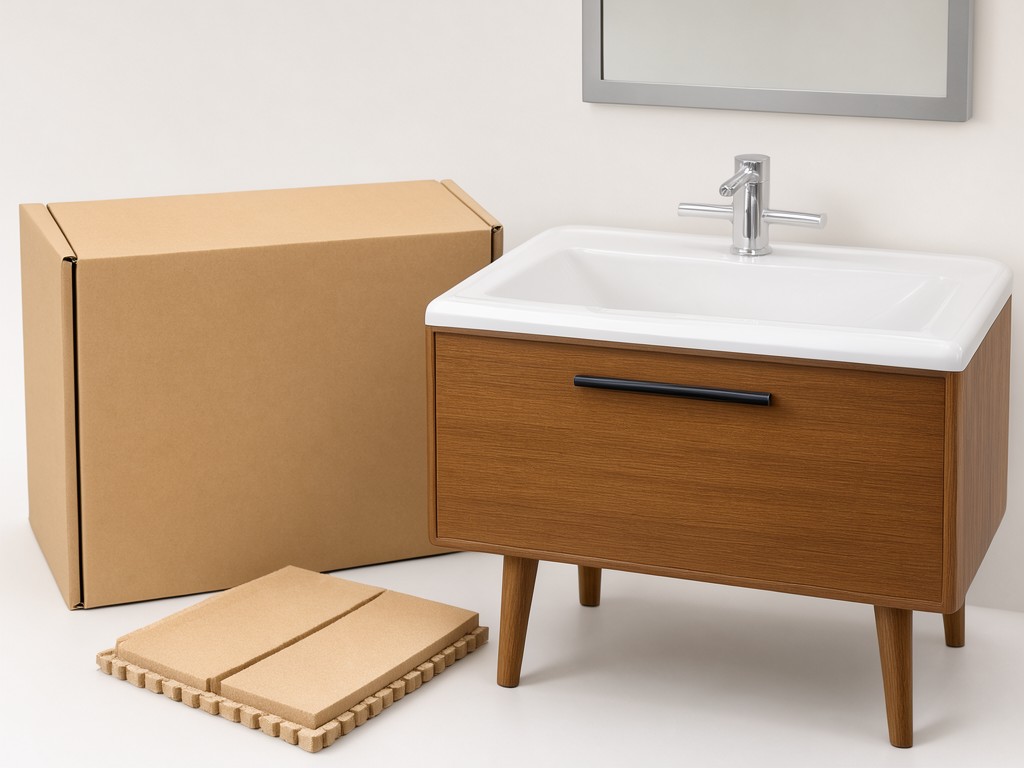
Veneer and solid-wood details bring the warm grain and tapered-leg profile associated with mid century design, but they need stable substrate preparation and controlled finishing. If edge sealing is incomplete around plumbing openings, moisture can reach the panel core. If drawer gaps are set by eye rather than checked against a batch reference, small assembly differences become visible across a retail display or multi-unit project.
Cost check: compare the quote against the agreed panel construction, edge treatment, finish system, hardware grade, replacement-part policy, and export packing. A price without those details is not a like-for-like comparison.
Matching the Product to the Buyer's Need
Start with the expected use and service burden, then set the construction. A guest bathroom with intermittent use may justify a different hardware and surface package from a hospitality vanity that sees frequent cleaning and repeated drawer cycles. Keep the same approved finish sample, hardware references, and dimensional tolerances across the order if the range will be replenished.
- Identify the use level and installation type.
- For occasional residential use, prioritize a finish and cabinet construction that meet the target price without leaving unfinished edges at cutouts.
- For frequent guest or multi-unit use, specify hardware suited to repeated operation and plan access to replacement hinges, drawer runners, and handles.
- Choose the cabinet and surface combination.
- If natural grain and a furniture-like appearance lead the brief, review veneer species, grain direction, stain sample, and batch matching before production.
- If the range must simplify replacement and finish matching, consider a controlled decorative surface with a documented colour reference.
- Freeze the interfaces before tooling or mass production: overall dimensions, basin and top cutouts, tap-hole position, wall fixing points, plumbing clearance, and carton orientation. A late change at any interface can affect both assembly and pack-out.
| Usage level | Likely stress point | Selection emphasis | Cost implication |
|---|---|---|---|
| Occasional-use guest bathroom | Splash exposure near the basin and cut edges | Sealed edges, stable finish colour, and confirmed plumbing clearances | Keep options focused; do not pay for hardware intended for constant turnover. |
| Daily-use residential bathroom | Repeated drawer movement, cleaning, and finish contact | Consistent drawer alignment, serviceable runners, and a finish suitable for the buyer's cleaning instructions | A hardware upgrade can cost less than repeat adjustments or component replacement. |
| Hospitality or multi-unit project | Frequent use, cleaning cycles, and replacement matching across rooms | Batch-controlled finish, repeatable dimensions, accessible spare parts, and project-ready packing | More specification control may raise the unit quote while reducing site rework and claim handling. |
Assumptions Buyers Should Stop Making
A Finish Sample Equals a Batch
Wood grain, stain uptake, and sheen can vary with substrate and finishing conditions. Approve a retained reference sample and define acceptable appearance variation before the factory runs the full quantity.
A Furniture Finish Is Automatically Bathroom-Ready
Bathroom exposure concentrates around basin edges, plumbing openings, and the cabinet base. Specify edge sealing and cleaning conditions; appearance alone does not show how the finish will respond at those locations.
Likewise, a nominal cabinet width does not confirm that the basin, tap, wall fixing, and plumbing all fit the intended installation. Confirm the interface drawing and use the same revision for the approved sample, production inspection, and carton identification.
Requirements by Buyer Segment
Wholesale buyers need a repeatable assortment with clear carton marks and replenishment references. A brand product manager may place more weight on grain selection, handle style, leg profile, and the retail finish sample. Procurement teams for projects usually need drawing control, installation notes, spare-part identification, and a packing method that supports staged delivery.
- For private-label orders, approve the logo location, label content, finish code, hardware references, and carton artwork before bulk production.
- For distributors, align the SKU structure with cabinet size, basin or top option, colour, and installation type so replacement orders identify the correct configuration.
- For multi-unit projects, specify how units are protected from corner impact and surface rubbing during export handling, and how each carton maps to a room or delivery lot.
What Gets Checked Before Shipment
A useful pre-shipment inspection compares production units with the approved sample and controlled drawing, not with memory or a catalogue image. The factory can check cabinet dimensions, squareness, door and drawer gaps, hardware operation, finish appearance under consistent light, and the position of basin and plumbing cutouts.
Inspect exposed edges and corners for coating skips, veneer lift, chips, or impact marks. Operate each drawer and door through repeated manual cycles to identify binding, uneven travel, or loose fittings; verify that cartons include the specified fittings and installation information. For repeat orders, retain the approved finish reference and record the production lot so a later claim can be traced to its batch.
Agree the inspection scope before the purchase order is released. If the buyer requires specific sampling, packaging checks, or a particular finish comparison method, include it in the order documents rather than treating it as an informal shipment request.
Review a Quotation Against Your Repeat-Order Risks
Send the target dimensions, cabinet and top configuration, finish references, hardware requirements, order quantity, destination, and private-label details for a quotation review. The comparison can identify where a lower unit price shifts cost into finish mismatch, damaged freight, installation adjustment, or warranty replacement.
Use the same approved construction and inspection basis for the first order and replenishment run. Request a quotation review with your current specification or sample notes.