Specifying custom bathroom vanity cabinet with storage factory for Wholesale and OEM Orders
Weight and stiffness trade off against each other in a vanity carcass: heavier panels can feel firm under drawer and countertop loads, but they add freight weight and put more demand on wall fixings. Wholesale complaints often start elsewhere—swollen panel edges after splash exposure, doors that drift out of alignment, or drawer fronts that loosen after repeated use. Those failures are usually tied to panel choice, edge sealing, hardware setup, or an installation condition that the specification did not account for.
A custom bathroom vanity cabinet with storage factory should be able to hold the approved cabinet dimensions, drilling pattern, finish and hardware combination across production runs. For OEM buyers, the practical objective is fewer warranty claims on repeat orders—not a cabinet that only looks correct in the approval sample.
What This Product Is and Where It Fits
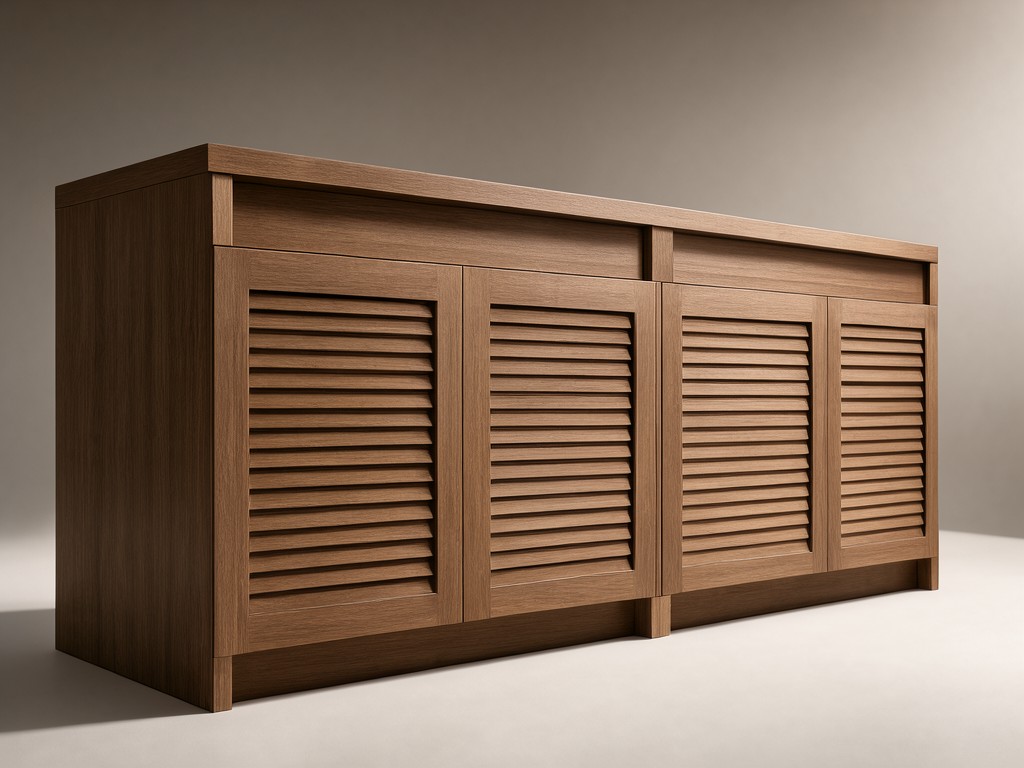
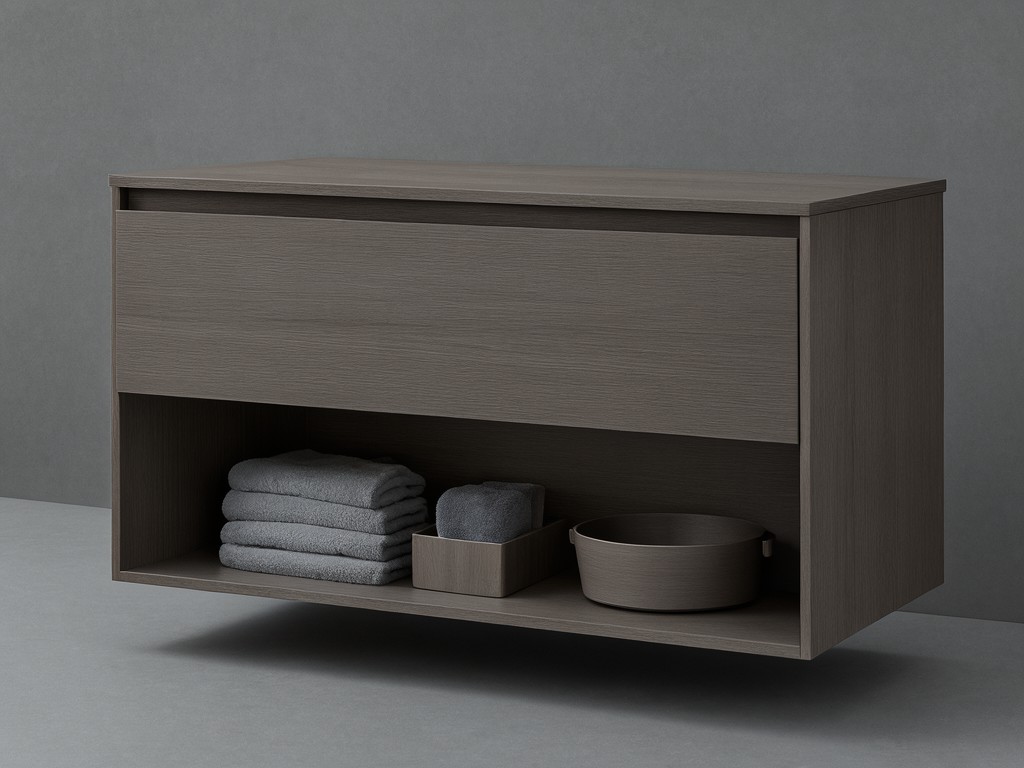
Repeated contact with humid air and occasional water splash sets the working conditions for a bathroom vanity. The product is a made-to-order cabinet assembly—typically a sink base with doors or drawers, storage sections, a finished exterior and provisions for plumbing access. Exact width, depth, height, basin clearance and drawer layout follow the buyer’s approved drawing and local installation requirements.
Panel cutting, CNC drilling, edge application, hardware fitting and cabinet assembly form a practical production route for repeat OEM orders. Fatigue appears at stress concentrations: around hinge screws, drawer-slide fixings, cut-outs and joints that carry the countertop load. A drawing that defines those details gives the factory a repeatable build target and gives procurement a sound basis for incoming checks.
Material Options and Their Trade-offs
Moisture damage usually begins at an exposed or poorly sealed edge, not across the middle of a finished panel. Choose the substrate and surface system together; a moisture-resistant core does not compensate for an unsealed cut-out or a finish that is incompatible with the intended cleaning routine.
- If the priority is a controlled cost for a flat-pack or assembled cabinet, consider a melamine-faced panel. Confirm the core grade, edge treatment and sealing method for sink and plumbing cut-outs.
- Use moisture-resistant MDF where a smooth, paintable face is needed; specify sealed edges and allow for the added weight compared with lighter panel options.
- Use plywood where the design or fixing loads call for a layered wood core; panel grade and face quality affect cost, appearance and the finish process.
- If the exterior requires a painted or veneered appearance, approve the finish on the actual proposed substrate. Colour, sheen and edge appearance can vary with substrate preparation and production conditions.
- If the cabinet sits close to a shower or receives frequent splash, specify sealed edges, protected cut-outs and a cleaning method that will not attack the surface or joints.
| Exposure or wear point | Specification to confirm | Factory check |
|---|---|---|
| Splash at the sink and standing moisture near the base | Substrate, surface finish, edge band and cut-out sealing detail | Inspect edge coverage, joints and exposed panel areas against the approved sample |
| Repeated opening and closing of doors and drawers | Hinge and slide type, fixing positions, front alignment and adjustment range | Check operation, fastening and alignment on assembled units |
| Countertop and basin load at the cabinet top and joints | Panel thickness, support layout, joint construction and fixing method | Verify dimensions and assembly against the approved drawing and agreed load requirements |
How Consistency Is Held Across Batches
Repeat loading drives failure when a fixing is placed too close to an edge, a joint has insufficient support, or a drawer slide is out of line. A production specification should lock the panel thickness, cabinet dimensions, hole locations, edge details, hardware references and finish sample. Changes to any of those inputs can alter fit or service behaviour, even when the cabinet’s outside dimensions remain the same.
For repeat orders, retain the approved drawing, bill of materials, finish reference and hardware schedule as one revision-controlled set. Check first-off units for overall dimensions, diagonal squareness, hole positions, door and drawer gaps, finish appearance and hardware operation before the batch proceeds.
Batch checks should also record panel and finish substitutions. A change in board source, edge band, coating system or hardware can affect colour, drilling behaviour, edge adhesion or adjustment range. Keep carton identification tied to the production lot so a field complaint can be traced to the relevant build details.
Keeping Repeat Orders Supplied
Availability depends on the agreed panel finish, hardware and order quantity. Standard board colours and common hinges or slides may be easier to schedule than a custom-painted finish, special veneer or nonstandard hardware set. Confirm replenishment timing against the approved specification rather than assuming a previous production slot guarantees the same material availability.
For a repeat program, procurement can reduce substitution risk by setting a forecast, approving any alternate components in writing and keeping a reference sample for visible finishes. Before shipment, agree the cabinet protection, carton configuration, hardware packing and retail or OEM labels. Freight damage to corners and finished faces can create returns that resemble factory defects, so packaging requirements should be part of the order specification.
Setup, Use and Replacement Parts
Installation on an uneven wall or floor can twist the cabinet and leave doors or drawers misaligned. Level and secure the cabinet as specified, support the countertop as required by its design, and keep plumbing cut-outs clear of cabinet joints and hardware fixings. Buyers should provide the factory with the basin and plumbing clearances before finalizing drawer depth or shelf position.
Wipe standing water promptly and use cleaning products compatible with the selected finish. Avoid prolonged moisture at panel edges and around cut-outs; swelling in those locations may not be reversible. For service parts, record hinge and slide references, handle dimensions, finish code, cabinet revision and production batch. Matching those details helps distinguish a replaceable hardware issue from a cabinet fit or finish complaint.
For a specification review, send the cabinet drawing, target order quantity, finish reference, basin and plumbing details, hardware requirements, packaging needs and any return or warranty patterns from the current range. Discuss the vanity cabinet specification with the factory team before approving the production sample.