china bathroom vanity factory: Specification, Ordering and Quality Notes
What This Product Is and Where It Fits
Cheaper stock options fail at the worst point in the season. In the commercial bathroom sector, that failure point is usually the gap between the cabinet carcass and the countertop overhang, or the sealant line where the basin meets the stone. When a bulk order of 200 units arrives with a 1.5mm variation in depth or a chip on the waterfall edge, the installation contractor refuses the shipment. The return shipping cost for a 1.2m vanity unit typically exceeds the unit value of the product itself, eroding the margin that the initial low factory price was meant to provide.
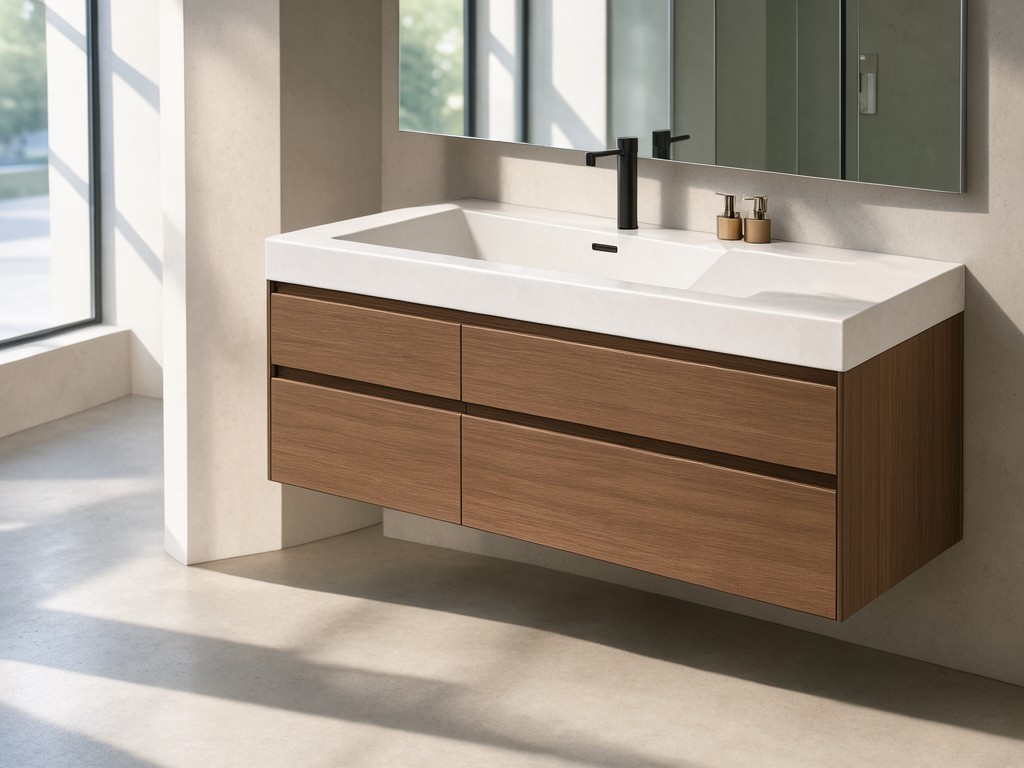
A specialized china bathroom factory operates differently from a general furniture exporter. The difference lies in the integration of wet-area components. We do not just build a box; we manage the structural interface between moisture-resistant substrates, stone or quartz slabs, and hardware that must withstand daily thermal shock and chemical exposure. For a brand product manager, the value proposition is not the lowest FOB price, but the reduction of field failures. By tightening dimensional tolerances on the cabinet shell and verifying the hardness rating of the countertop material before cutting, we eliminate the two most common causes of warranty claims: water ingress into the core and surface scratching on the stone.
Dimensional Tolerance
Standard export furniture often allows ±3mm. For vanity units with integrated stone tops, we hold the carcass depth to ±1mm. This ensures the overhang aligns with the floor tile grid without requiring on-site adjustments.
Moisture Resistance
Carcase boards are not standard melamine. We use MDF with a phenolic core or marine-grade plywood. This prevents the "balloon effect" where edges swell after three months of humidity exposure in tropical climates.
Hardware Load Rating
Drawer slides are rated for 45kg static load, not the generic 25kg. This accounts for the weight of stone basins, soap dispensers, and towel bars that users add after installation.
Total cost of ownership shifts once returns are counted. When you evaluate a quote, look past the unit price and calculate the cost per 1,000 units installed. If the factory cannot provide a pre-shipment inspection report that includes a 24-hour water immersion test for the countertop sealant, assume a 5% defect rate. That 5% is not a statistic; it is the cost of a replacement stone slab, a re-visit by the installer, and a customer service ticket. We structure our pricing to cover these quality control steps, ensuring that the 95%+ of units that pass final inspection remain at the job site, not in a reverse logistics container.
Design Constraints Behind the Specification
The specification agreement is the most critical phase of the order. It is where the risk is transferred from the factory floor to the production line. We do not start cutting wood or ordering stone based on a PDF rendering. The process begins with a detailed technical drawing that specifies not just dimensions, but material call-outs and joinery types.
- Countertop Thickness: Standard residential slabs are often 20mm. For commercial or heavy-use residential vanities, we specify 30mm slabs with a 10mm laminate backer. This reduces flexing when a user leans on the counter. The drawing must specify the edge profile—waterfall, bullnose, or bevel—as this affects the stone cutting waste and cost by up to 15%.
- Basin Integration: Undermount basins require a specific cutout tolerance of ±0.5mm. If the stone cutout is 1mm too large, the basin sits in a visible gap, compromising the seal. We use a template method where a physical plastic jig is shipped to the stone supplier, ensuring the cut matches the cabinet’s internal dimension exactly.
- Hardware Layout: The position of the faucet holes must align with the plumbing rough-in of the building. We provide a template for the faucet holes that is printed on the stone sample before final cutting. This allows the buyer to verify the spacing (typically 4 inches or 150mm center-to-center) against their plumbing standards before we proceed.
Sample approval is non-negotiable for first-time orders. We produce a "Golden Sample" that includes the exact wood species, the stone slab with the specific grain pattern (if applicable), and the installed hardware. This sample is signed off by the buyer’s quality team. Once approved, we seal the sample in a clear box with a unique batch number. Every production unit is checked against this physical reference. If the wood grain direction or stone color deviates from the Golden Sample by more than a defined delta-E value (for paint or stain) or a visible vein mismatch (for stone), the unit is rejected before packing.
This level of documentation might seem bureaucratic, but it is the only way to prevent disputes. A verbal agreement on "light oak" leads to a shipment of dark oak. A written specification citing a specific RAL color code or a physical stone slab ID eliminates ambiguity. We require the buyer to provide their brand logo as a vector file (AI or EPS) for engraving or decal application. We do not accept raster images (JPG, PNG) for laser engraving, as the resolution leads to jagged edges that look unprofessional on a finished product.
Materials and Construction Trade-offs
Replacement rate, not unit price, is the true metric for material selection. The choice of substrate and finish determines how the unit ages. Here is a breakdown of the material options we offer and the specific failure modes they address.
| Material Component | Standard Option | Enhanced Option | Service Life Impact |
|---|---|---|---|
| Cabinet Core | 18mm MDF (Melamine Coated) | 18mm Marine Plywood (Phenolic) | MDF is susceptible to edge swelling if the laminate is scratched. Marine plywood resists water intrusion for 10+ years, reducing warranty claims on cabinet base rot. |
| Countertop | Solid Surface (Acrylic) | Engineered Quartz (Mohs 7) | Solid Surface can be repaired but stains with turmeric or coffee. Quartz is non-porous and resists heat and stains, extending the aesthetic life to the end of the building's lease. |
| Door Panels | Thermofoil (PVC Wrap) | High-Pressure Laminate (HPL) | Thermofoil can peel at the edges after 3-5 years of heat exposure from hair dryers. HPL is a solid surface layer that does not peel, though it can chip if impacted by heavy objects. |
| Drawer Slides | Standard Soft-Close (25kg) | Reinforced Ball-Bearing (45kg) | Standard slides sag under the weight of stone organizers. Reinforced slides maintain alignment and smooth operation over 50,000 cycles, reducing user complaints about "junky" hardware. |
Trade-off Warning: If you choose Solid Surface for the countertop, you must specify a thicker edge profile (minimum 20mm) to avoid the "thin plastic" look that consumers associate with low-cost products. Quartz allows for thinner profiles (12mm) because of its rigidity, but the cutting cost is 20% higher. The choice depends on your target retail price point. If you are selling to the entry-level market, Solid Surface offers a better cost-performance ratio for durability. If you are selling to the mid-range market, Quartz is expected, and omitting it will lead to negative reviews.
The finish of the wood is equally important. We offer UV-cured lacquer for high-gloss finishes. This process creates a hard, chemical-resistant surface that is resistant to yellowing. However, it is less forgiving of wood defects than matte melamine. If the wood substrate has a knot or a void, the high-gloss finish will highlight it. For this reason, we recommend using veneer over MDF for high-gloss units, as the veneer can be matched and patched to hide substrate imperfections. This adds a labor step but significantly improves the visual consistency of the final batch.
Usage Scenarios and Buyer Segments
The specification varies depending on who installs the unit and how it is used. A boutique hotel buyer has different requirements than a home improvement chain.
Boutique Hotels and Serviced Apartments
These buyers prioritize aesthetics and quick turnover. The vanity must look luxurious but be durable enough to survive 200+ checks per month. We typically recommend Quartz countertops with a matte finish to hide water spots from guests who do not dry the surface. The cabinet doors should have integrated soft-close mechanisms to prevent slamming noise, which is a major complaint in hospitality settings. Hardware should be concealed (push-to-open) to maintain a clean line. The critical failure mode here is guest abuse: heavy perfume bottles being knocked off the edge. The stone must be thick enough to chip-resist, or the edges must be bullnosed to reduce breakage risk.
Mid-Range Residential Developers
These buyers are cost-sensitive but need to protect their brand reputation. The vanity is often a standard size (e.g., 800mm or 1000mm width) to streamline inventory. The material choice is usually HPL for the doors and Solid Surface or entry-level Quartz for the top. The key requirement is consistency. The buyer wants 500 units that look identical. We achieve this by locking the wood batch and the stone lot number. We also provide a "pre-installation kit" with all necessary anchors and brackets, reducing the time the installer spends on site. This speeds up the project timeline for the developer, which is a key selling point.
High-End Retail Showrooms
These units are on display for months before sale. They must withstand daily cleaning with harsh chemicals and UV exposure from showroom lighting. We recommend UV-stable finishes and stone that is resistant to yellowing. The hardware must be tested for 100,000 cycles because showroom visitors open and close doors constantly. The packaging must be premium, as the unboxing experience is part of the brand image. We offer branded wooden crates with your logo printed on the top, which can be reused as display stands in the store.
Export Packaging and Handling Protection
Packaging is not just a box; it is a structural component that protects the product during the 30-day ocean freight transit. A damaged corner on a stone top is a total loss because the slab cannot be repaired. Our packaging strategy is based on the "six-point protection" principle.
- Corner Protection: Each corner of the stone top is protected with a 5mm thick EVA foam corner block. This absorbs impact from forklifts and container shifts. Standard cardboard corners are insufficient for stone.
- Vertical Support: The cabinet is packed upright, not on its back. If packed on its back, the weight of the stone top compresses the wood carcase, causing warping. We use a cradle system that supports the unit from the bottom and sides.
- Internal Bracing: The drawers and doors are removed and packed separately in their own boxes. This prevents them from shifting inside the cabinet and scratching the finish during transit. The hardware is packed in a sealed bag with a checklist attached to the top of the box.
- Moisture Barrier: The entire unit is wrapped in a plastic vapor barrier before being placed in the cardboard box. This protects against condensation inside the container, which can cause wood swelling and stone etching.
We use double-wall corrugated cardboard (5-layer) for the outer box. The box is reinforced with edge protectors to prevent crushing from stacked boxes above. Each box is labeled with "Fragile - Stone Top" and "This Side Up" stickers in three languages (English, Chinese, and the destination country's language). We also include a QR code on the box that links to a digital installation manual, reducing the need for printed manuals that get lost.
Freight Configuration Note: A 1000mm wide vanity unit has a packaged dimension of approximately 1100mm x 600mm x 1200mm. This allows for 4 units to fit in a 20ft container. If you choose a waterfall edge design, the packaging height increases by 50mm to accommodate the stone overhang. This reduces the container capacity to 3 units. Plan your shipping volume accordingly to avoid paying for empty space.
Care, Storage and Service Life
The service life of a vanity is determined by how well it is stored before installation and how it is maintained after. Wood is a hygroscopic material; it absorbs and releases moisture from the air. If a unit is stored in a warehouse with fluctuating humidity for more than 3 months, the wood will expand and contract, potentially causing joints to loosen. We recommend storing the units in their original packaging in a climate-controlled environment, ideally between 45-55% relative humidity.
For the stone countertop, the care instructions depend on the material. Quartz is non-porous and requires only mild soap and water. Avoid using abrasive pads or acidic cleaners (like vinegar or lemon juice), as these can etch the surface over time. Solid Surface can be sanded to remove scratches, but it is susceptible to staining from tannins (tea, coffee, red wine). We provide a care card with each unit that lists the specific cleaner compatible with the stone type. This reduces customer service calls related to "stains" that are actually chemical etching.
The hardware has a finite cycle life. Standard soft-close slides are rated for 50,000 cycles. At a rate of 10 opens per day, this translates to roughly 13 years of service life. If the buyer wants a 20-year warranty, we can upgrade to slides rated for 80,000 cycles. This is a small cost increase that significantly extends the product's usability. The hinges should be tested during installation to ensure they are adjusted correctly. Improper hinge adjustment is the leading cause of door sagging, which is not a manufacturing defect but an installation error. We provide a hinge adjustment template to help installers align the doors perfectly.
Start Your Specification Review
We are ready to review your drawings and material selections. Send us your technical specifications, and we will provide a detailed cost breakdown and a production schedule within 48 hours. Our goal is to help you reduce your warranty claims and build a repeatable supply chain.
Request Specification Review